
Dear Friends,
I was at the TomorrowX Summit this week in Austin. In short, the only person not shilling their wares was Stanley Druckenmiller, and he said he’s ‘not playing’ and is focused on avoiding losses.
The last question asked to all the speakers was “What can AI do to improve humanity?” Most answered in vague terms - ‘solve all disease’ or ‘cure cancer’ - which is fair enough if you are selling infrastructure. It’s not your job. People will have to use and direct the tools to create solutions and then implement them at scale. That’s where the differentiation is, and the end value for humanity will be created.
Meanwhile, buried in this week’s news was a $400M financing for a company called Science to do just that. Disclosure: Avalanche and I are investors in earlier rounds.
During my senior year at Duke, my friend Elliott, who signed his newspaper column “Q.E.D.,” pointed at the kid next to him, “He’s a genius neuroscientist!”
Curious given Elliott was calling another man brilliant, I shifted my gaze to the teenager on his right. He had vampire skin and intense eyes. He shrugged as my friend laid on more praise. At the time, Duke had one of the best neural engineering labs in the world. And young Max Hodak had already been making a mark, pushing forward early research and experimentation on brain-computer interfaces.
Between Duke and today, Max has launched a series of impressive ventures that have proven that he’s more than a geek in a lab, including Transcriptic, an automated research lab, and Neuralink, which he co-founded with Elon Musk and others. Max often references what he learned from working closely with Elon, including the focus on scientific talent, vertical integration, and massive ambition.
A few years ago, at a conference, I choked on my seltzer when I saw him run by and hustled to track him down.
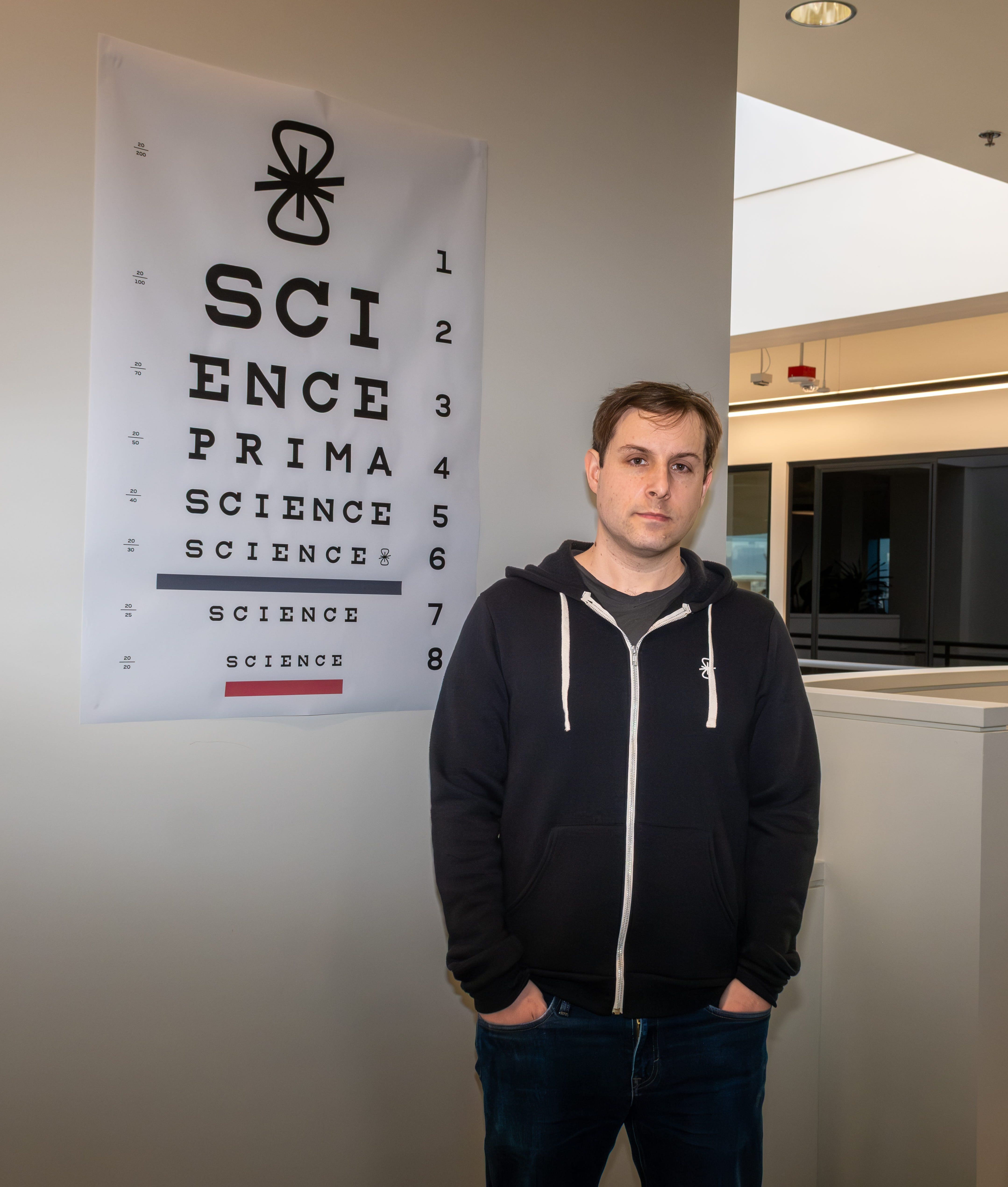
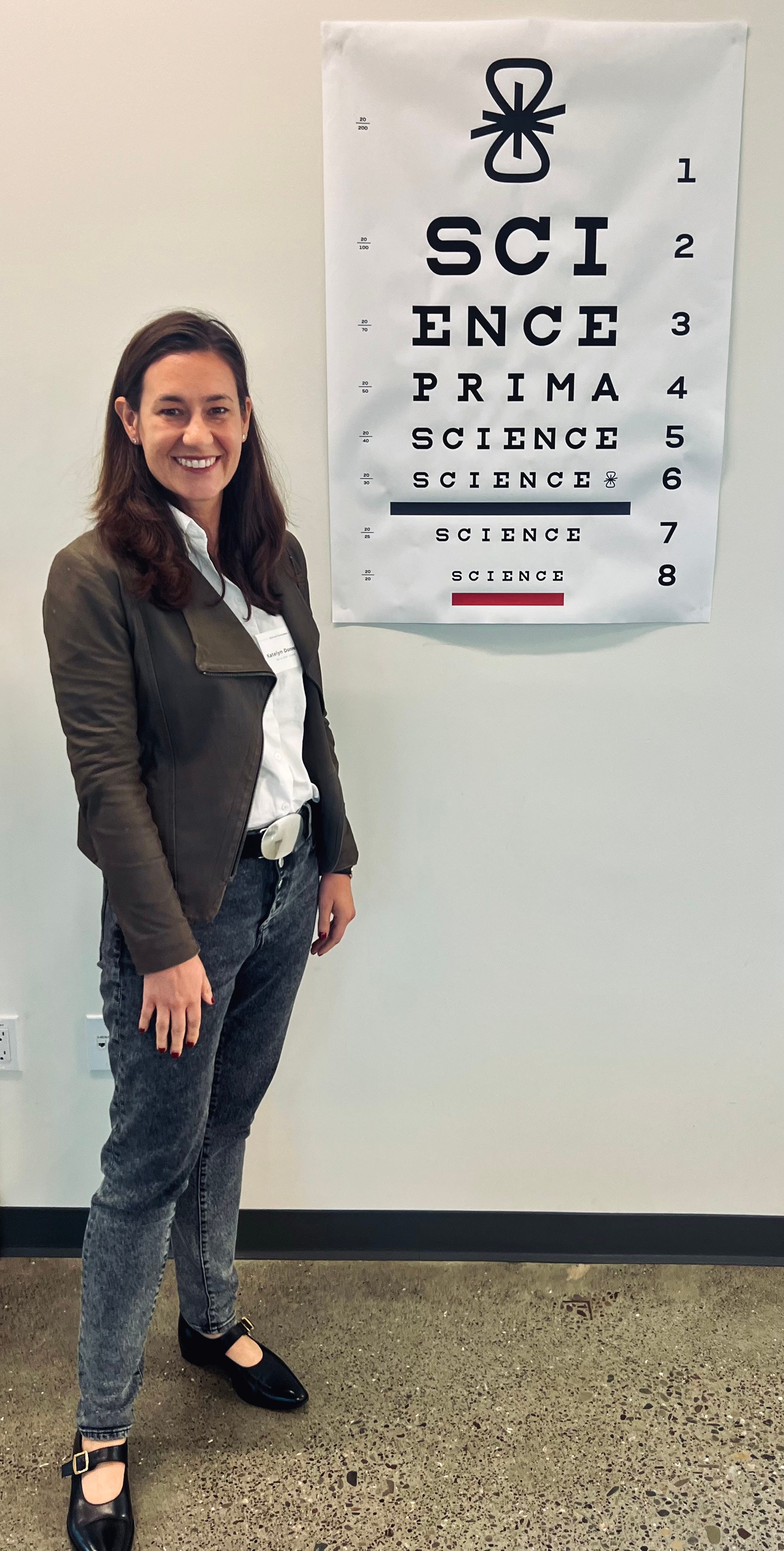
He took me through the thesis behind his current company, the one that embodies his life’s work, Science. He rapidly strung together persuasive declarative statements.
And then paused.
As I was prompting my brain for an impressive follow-up (‘try again, better question, and more scientific’), he interrupted my thinking with something like:
“Do you know how many scientists are living in their mansions outside of Boston who’ve never helped humanity at all?”
The answer was no. Of all the self-righteous indignations, the existence of these high-prestige, low-outcome scientists hadn’t yet percolated in my synapses.
That’s the Max I love! Driven not just by logic, but fundamentally by an emotive drive to achieve greatness by solving real problems with science - blindness to start. It’s why this week’s song is The Scientist by Coldplay, a reflective song about the pull between logic and emotion.

I replied: Where do I enlist? Draft me into your army; I’ll fight in your war!
Science is a quietly absurdly ambitious company. Vertically integrated with a range of innovative medical devices and research facilities. Its first product, PRIMA, is an implant paired with glasses that restores some vision to people with macular degeneration. It is approved in Europe and already in use with patients in Germany. PRIMA is the first step. Behind it is a large platform that includes a program to connect to the brain with living neurons and another to extend healthy life.
I recently attended their three-hour Science Investor Summit. 2 hours and 50 minutes of over a dozen scientists breaking it all down. 10 minutes of financials. Black coffee, no food. On brand.
Here is my declarative statement: Science will be a generational company, worth well into the tens of billions. At a reported $3.5 billion today, it sounds ambitious. It requires PRIMA to reach US patients and the broader platform to produce many more transformational products. Check back on me in a few years.
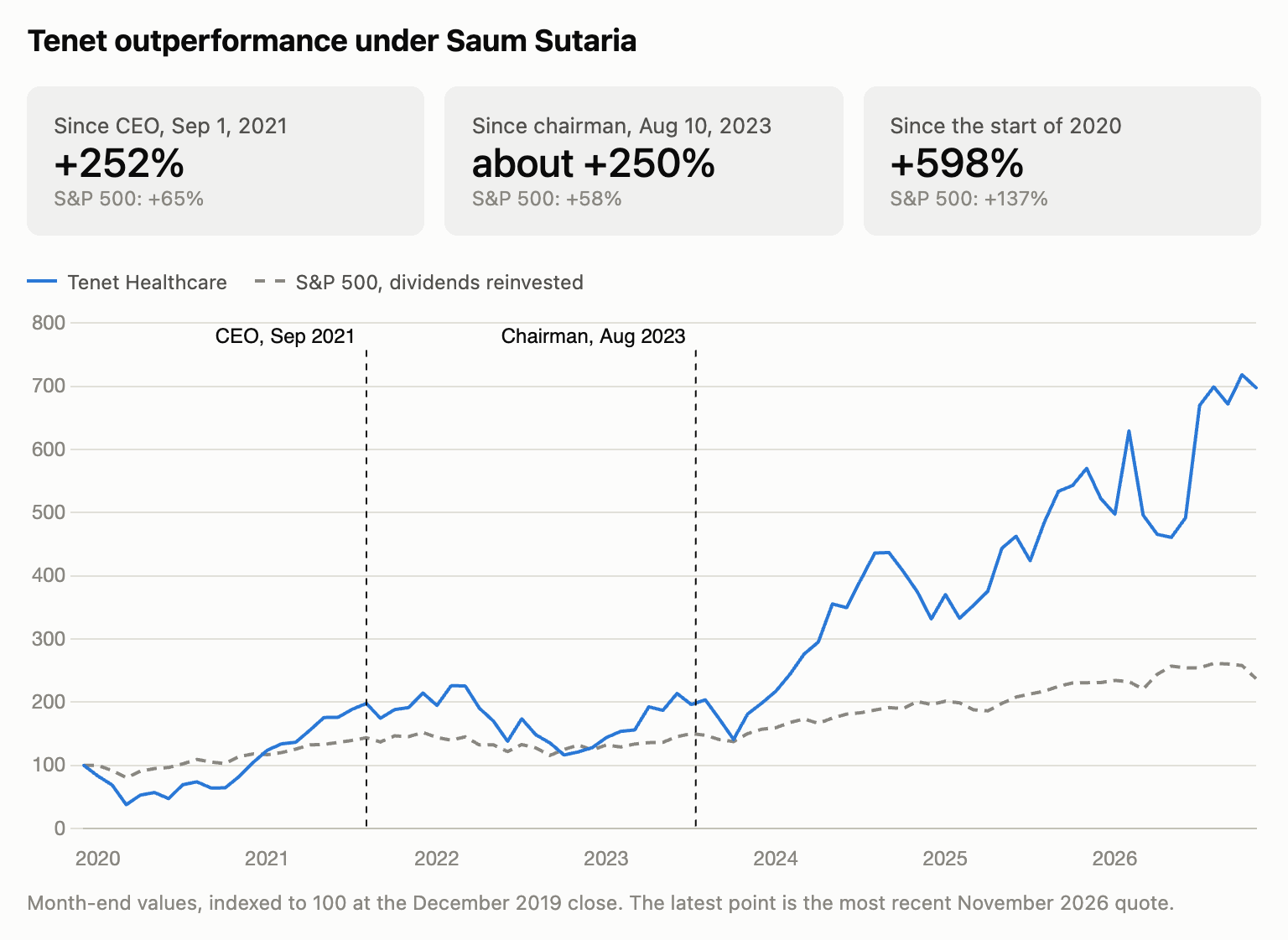
One more interesting and exciting aspect about the announcement is the strategic investment from Tenet Healthcare. Why? Well, Tenet is a large publicly traded healthcare delivery company in the US. It is run by Saum Sutaria, a legendary McKinsey senior partner when I was at the firm in 2008-2010, who helped build a significant part of its healthcare practice. He joined Tenet as COO in 2019, CEO in 2021, and Chairman in 2023. The stock is up about 3.5 times since he became CEO, against about 1.65 times for the S&P 500. And they say that former McKinsey partners can’t operate?
I have no insider knowledge of Tenet’s reasoning. My read: Tenet’s USPI is the largest ambulatory surgery platform in the US, and implants need surgical sites. I love that one of the smartest CEOs in healthcare is invested in Science’s vertically integrated play. This is the kind of alignment it takes to get science to patients at scale.
At TomorrowX, the president of The Boring Company was asked, ‘Why did you come and work for SpaceX and now Boring?’ and he said, ‘I wanted to work with the best engineer of my generation.’ While Elon Musk may take that crown, we still need the best scientist of my generation. My money is on Max Hodak.
Thanks for reading, friends. Please always be in touch.
As always,
Katelyn