
Dear Friends,
Markets go up. Markets go down. And the world moves on, mostly - and definitely in the long run - up and to the right.
Short on graphics this time; this edition of the newsletter is for readers.
Today's Contents:
Sensible Investing: Trends
Invisible Trends: DeSocial & Parent-Tech
Weeklies: Selfie & Song
Sensible Investing
“Deloitte, a $74 Billion Cancer Metastasized Across America.” This article was the most-shared piece on X in January with 45M views and won their $1M prize. I saw it on my scroll and thought ‘OBVIOUSLY! EVERYONE KNOWS THAT!’ and did not read it. Others responded differently. And now that I’ve perused the piece, it’s not even comprehensive. Interesting that it won nonetheless.
Fraud Investigation is Believing Your Lying Eyes is a good article by Patrick McKenzie, who spent years working with Stripe on combating fraud. I hope we can move beyond the partisan performative politics and get to practical solutions soon.
Minnesota has suffered a decade-long campaign of industrial-scale fraud against several social programs. This is beyond intellectually serious dispute. The 2019 report from the Office of the Legislative Auditor (a non-partisan government body) makes for gripping reading.
2026 Tech Trends Report from Contrary Research. 352 pages of charts, too large to summarize. Nothing surprising, though, IMHO.
Death of Software. Nah. by Steven Sinofsky. He thinks we are still in the early days of what software can do.
Long APIs, Short Slides by Alexander Campbell was also good. Two types of software and the end of the labor arbitrage.
The thing that’s really dead isn’t software at all. It’s the services economy built on top of software.
What does Infosys actually do? It sells competent Indian engineering hours to Western corporations at competitive rates. What does Capgemini do? It sells bodies — 350,000 of them — to run, maintain, customize, and implement enterprise software. What does Cognizant do? Same thing, different logo.
The entire IT outsourcing model is labor arbitrage. Hire in Bangalore at $15/hour, bill in New York at $80/hour, pocket the spread. This model has generated hundreds of billions of dollars in revenue and created some of the largest companies in India.
AI is the thing that makes labor arbitrage worthless. Not by making the labor cheaper — you can’t get much cheaper than $15/hour — but by eliminating the need for the labor entirely
Third Point/Dan Loeb's Annual Letter highlights the current market dynamics. (Also, I must say, it helps to publish your 2025 letter in February 2026).
AI dominates market headlines and is increasingly forcing a re-think of established beliefs. One of them is the long-perceived attractiveness of capital-light business models like software, information services, and digital platforms that for decades required little to no physical investment to grow and achieve dominance. Many such companies are now facing increased investor skepticism about the sustainability of their moats and scrutiny of their high-margin structures.
At the same time, capital-intensive businesses like construction services, aggregates, transports, and defense contractors are having their moment, as investors are waking up to their mission critical role in the rebuilding of supply chains, national security complexes, and data center infrastructure. We own many of these winners and continue to look for new ones.
Carbon Health files for Chapter 11 bankruptcy relief with more than $100M in debt.
This was one of the high-flying VC-backed companies from 2021 (>$600M raised in equity), operating a mostly brick-and-mortar business with notoriously low margins (primary care delivery).
News is a good reminder as private investors pour into many ‘American Dynamism’ companies with the same (or greater) capital intensity challenges over long timelines. This is why the core skill of today is instilling confidence in who you are and the story you tell, so that investors buy into your made-up intergalactic terminal value number, achieved many amorphous years into the future. Of course, relentless execution and operational achievements along the way help considerably.
Will Manidis wrote a viral piece that used many words to say the same thing, which he called ‘End Game Play.’:
Dwarkesh does not dispute that AI scales to terawatts. He does not dispute that it ends up in space. He has already conceded the terminal position. What he disputes is how much middlegame you can skip. Musk's answer, every time, is all of it. The limiting factor is power. Solve it. The limiting factor is chips. Solve it. The limiting factor is mass to orbit. Solve it. The middlegame is not a phase to be inhabited. It is a series of bottlenecks between now and the endgame, and bottlenecks exist to be eliminated and not paid much attention to otherwise.
The challenge for those who choose to build in the social sector (education, healthcare delivery, etc.) is that the terminal value is low and scale is constrained by human limitations, so it’s (nearly) impossible to build castles in the clouds for as long. This mentality is why we can’t have nice things (or at least not as nice from a returns perspective) in these sectors.
On that note, goodbye Carbon Health.
Invisible Trends: DeSocial & Parent-Tech
Decentralized Social is Very Much Alive.
One of my long-held theses is that the technology behind crypto could be powerful, particularly in empowering people and organizations to own their destiny, but many of the ‘crypto people’ are highly insular and technical. So when Farcaster announced it was being acquired and most of the original team was leaving, I wasn’t shocked, even though they had significant funding, a loyal following, and had built a bunch of innovative product features.
Many online said this means decentralized social media is dead. But that’s because it’s unfashionable in the Elonverse to discuss Bluesky.
AT Proto - the decentralized tech platform behind Bluesky - has been quietly surging.
There are now decentralized versions of many centralized social instances that saw a 2026 spike in users and activity. Those include EuroSky (for Europe), Streamplace (Twitch), and Skylight Social (a TikTok alternative, covered in a TechCrunch article).
Parent-Tech: People still want to build; some people want to buy it.
Tricky to invest in (smallish markets, natural churn, ability/willingness to pay subject to K-economy dynamics) but interesting nonetheless. These are great parent-founders building the tech they want for their families. Here are a few very early products to check out:
Giant is a media/storytelling company that personalizes content for each child.
Little Bird - Wearable Safety Tracking for Kids 2-12, so you don’t have to use an Apple Watch or an iPhone.
Spark Lingonberry is an AI family play portal that delivers interactive, engaging experiences for families through a virtual Scottish Golden Retriever. Here’s a video.


Weeklies: Selfie & Song
Selfie: Elliott, Limmy, ‘food service’, Why do you care what I think?
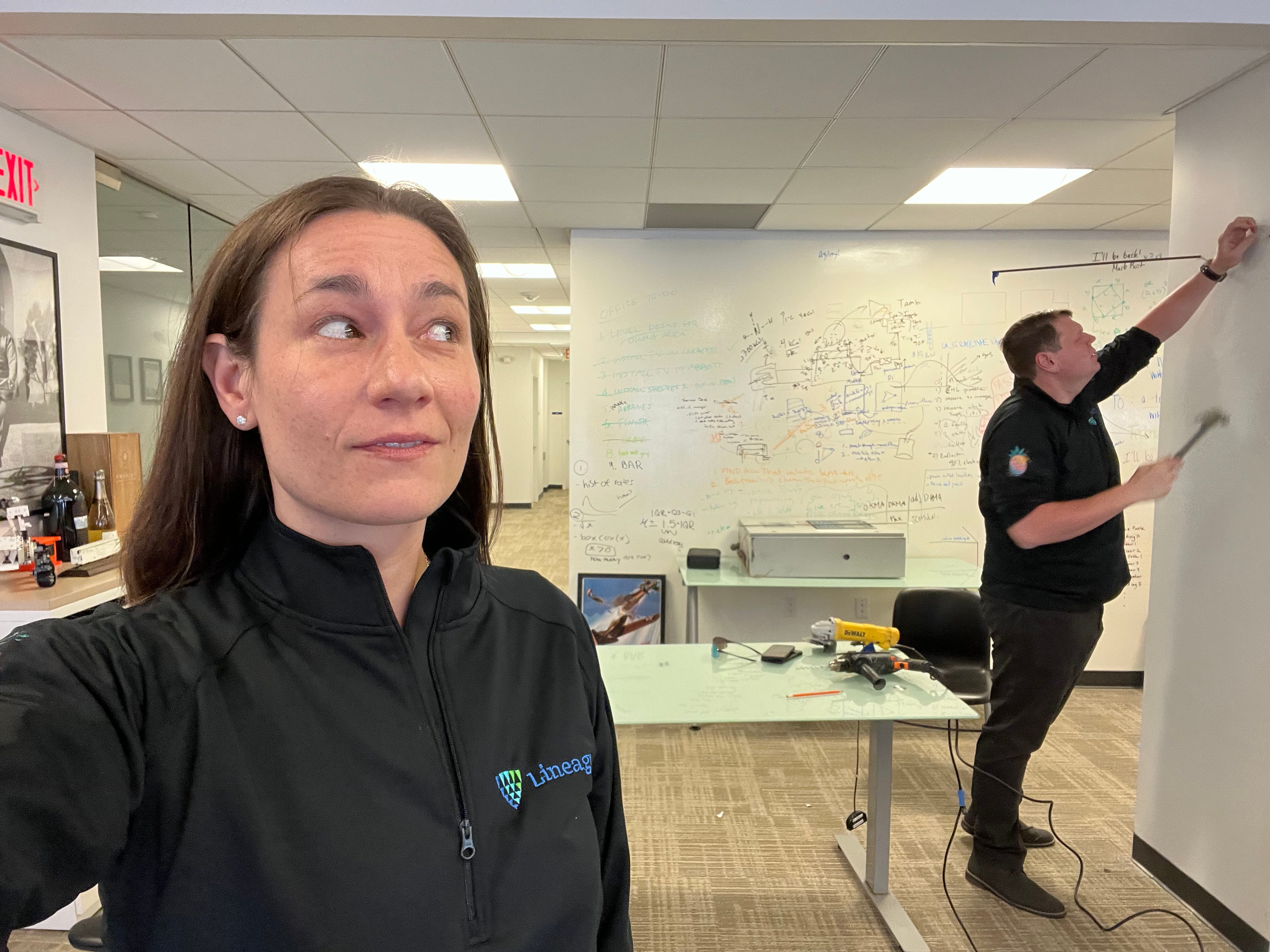
If you meet my friend Elliott, he’ll tell you that he works in food service, which is technically true but slightly misleading. Online, he describes himself this way: Mathematical statistician. Founded and lead the 50-member Data Science team at Lineage, the World’s largest warehouser of food. We do the math and science behind the handling, storage, refrigeration, and shipment of ~ 6 x 10^10 kgs of temperature-controlled commodities annually.
Elliot is a polymath genius, in truth. We met in my freshman year of college and have been friends ever since. Elliott wrote a column in the paper, and the end was always signed Q.E.D., which stands for quod erat demonstrandum, meaning "that which was to be demonstrated". It is used to indicate the end of a mathematical proof or a philosophical argument in Latin texts. At the time, I might have found it a bit arrogant, but now I only admire the conviction and self-belief.
Anyway, in modern times, the leaders of Lineage are smart, so they gave Elliott and his team a whole floor in Jackson Square and don’t ask any questions when he drills into the wall to install a piece of old industrial equipment as office decor. The whiteboard wall in the picture behind him was installed by Elliott and his brother in a weekend because he refused to pay a contractor $50K.
Elliott is generous and a good friend, so whenever I’m in SF, I try to take him up on his kind offer to work out of their office. Mostly for the conversation and vibes. Sometimes timing works out perfectly: I’ll meet with a deeptech company, and Lineage (since they are constantly innovating) is their first customer. The Ph.D. scientists on the team are happy to share their thoughts on the tech.
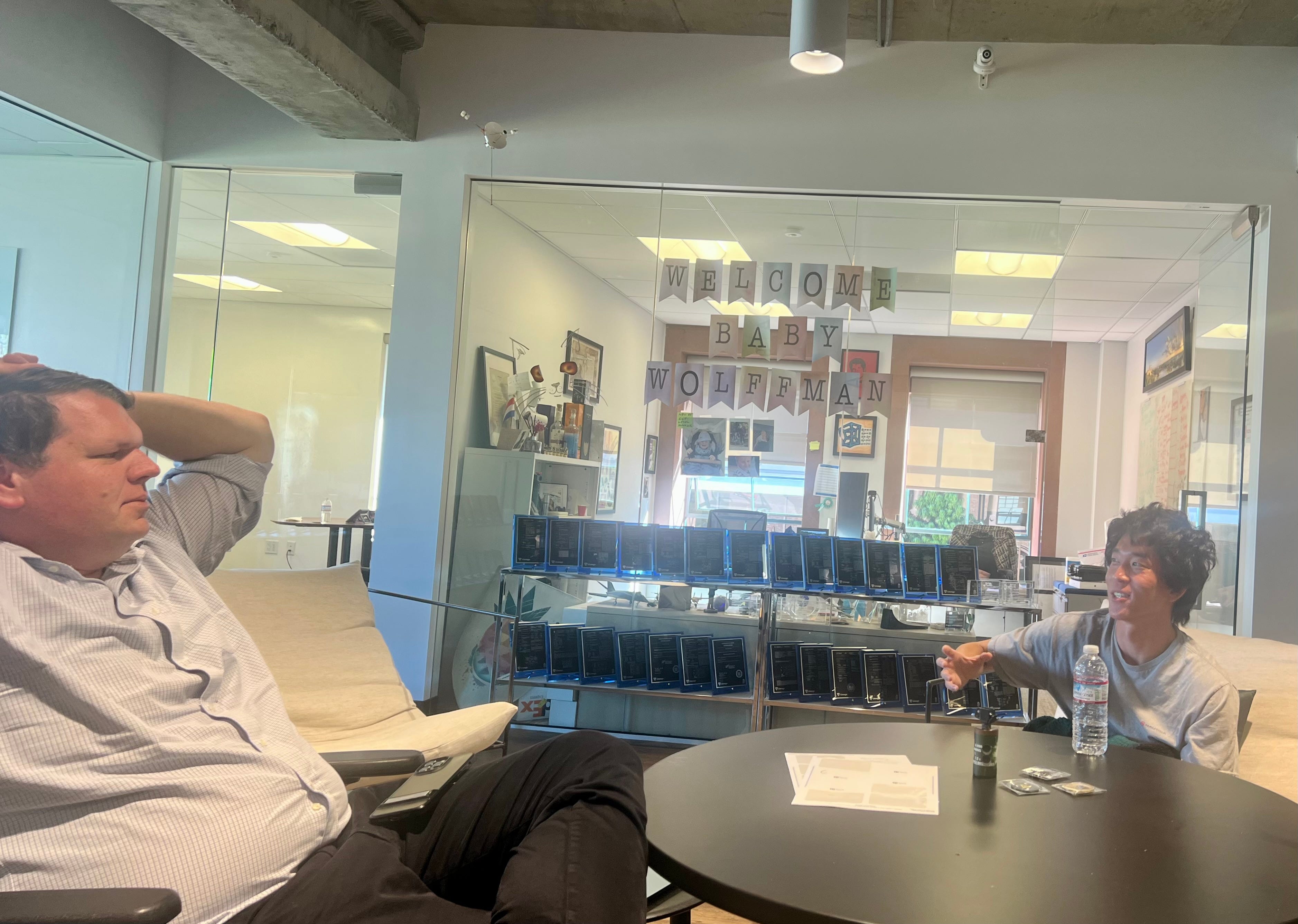
One of the most recent times when I hung out with Elliott, Limmy joined us, and he asked Elliott, something like, ‘What do you think I should be doing right now?’
Elliott responded quickly, “WHY DO YOU CARE WHAT I THINK?!” and explained that Richard Feynman’s book “What Do You Care What Other People Think?”: Further Adventures of a Curious Character was one of his favorites.
The mark of a true scientist and thinker. I love it.
A perfect - and very Elliott - response, conveying the message to be an original and independent thinker. Have the self-confidence and conviction to make your own thing in the world - which, to Limmy’s credit, is exactly what he’s doing!
Song: How It’s Done

Here on YouTube.
I was interested in the KPop Demon Hunters phenomenon (KPop Demon Hunters began streaming on Netflix on June 20, 2025, and became the most-watched original title in Netflix history with over 500 million views) and wanted to see what all the fuss was about.
Wow! The whole thing is just phenomenally well-executed. Banger soundtrack. And a completely wholesome social-emotional lesson: The girl band is clearly slaying inner demons defined by their behavioral patterns, and the takeaways are: openly communicate, trust your friends with your feelings, and everyone has something they are overcoming/fighting.
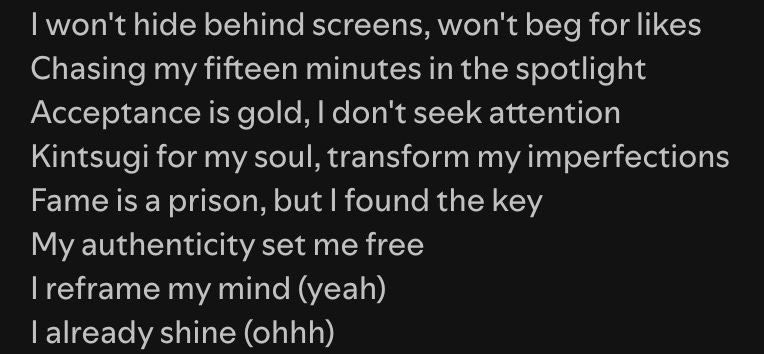
My friend Jules and her 4-year-old son were Saja Boys for Halloween. Being the creative ‘disco mama’ that she is, she created four new songs by a new boy band called “The Gs” to reorient the boy band from ‘praying on your insecurities’ to being positive.
More than a boy band, The G’s teach their fans — CUBS — the healthy way to process and sublimate the normal emotions of life. Their songs mix high-energy K-Pop-inspired beats with kid-friendly, uplifting themes, weaving in psychology and life lessons along the way.
Her song includes lyrics like:
Great stuff, all around!
“How It’s Done” by KPop Demon Hunters
Knocking you out like a lullaby
Hear that sound ringing in your mind
Better sit down for the show 'cause I'm gonna show you
How it's done, done, done
Thanks for reading, friends. Please always be in touch.
As always,
Katelyn
Impressive for that $1m win, i'm curious what the terms of the payout were. I've noticed that non-comprehensive articles go far more viral than comprehensive, comp will do 200-500k but a minimalist overview gets millions, which at large makes sense.
I've been having discussions about the ~moats~ crypto companies can have as they're just open source software.Something I worry about is Stripe really trying to buy up crypto companies, with 2025 they bought Bridge/Privy AND they're working on Tempo. Centralization in crypto, IMHO will implode upon itself (or) become extremely dangerous, as stipe will become an insane rent seeking middleman.
Privy invited me to a developer meeting and it had me worried about a company using both Privy and Bridge, essentially allowing Stripe to own their customer base. Sling Money utilizes Bridge and Privy, but once meeting with Privy and hearing the roadmap I immediately dropped Bridge for ZeroHash, and am considering dropping Privy, even, before app goes live on App/Play store.