
Dear Friends,
Hope your New Year’s celebrations were enjoyable and resolutions remain on track.
I’ll briefly acknowledge (and be cautiously optimistic about) the international environment with regime change in Venezuela and likely in Iran. Time will tell, and others can comment on those topics more completely than I will.
Apologies in advance for the lack of graphs in this edition.
Today's Contents:
Sensible Investing: Trends
Weeklies: Selfie & Song
Sensible Investing
Carta State of Startups 2025 (PDF). 175 pages of data and analytics on all things startups. This is a must-browse for anyone in the industry.
Endowment Eddie probably had the best VC Predictions list.
5) Early reads from AI are inflationary not deflationary. CEOs are reticent to do layoffs and the ability to trust AI remains low resulting in humans and AI duplicating efforts. We see much more recognition from enterprises that they aren’t ready to fully utilize AI due to data quality and data infra.
This fits with my core belief that 2026 is an AI-implementation year for the enterprise. A lot of new tools have hit the market; now, they need to be absorbed and used consistently to drive productivity.
Dan Wang’s 2025 Letter. It’s a consensus recommendation with the Twitterati, but they aren’t usually wrong. Wang published Breakneck: China’s Quest to Engineer the Future. It’s a long letter but worth a read. I like the format.
I appreciated his observations and questions about podcasts:
Again, who is listening to all these podcasts? I don’t much look at my book sales, but it doesn’t feel like podcasts move the needle. And a book might create a lot of social media buzz, with all the right people saying all the right things, but Twitter too doesn’t drive sales. It was two platforms that moved a lot of my books: television and radio.
What is Instagram’s Adam Mosseri Saying in His Year-End Memo?
Individuals, not publishers or brands, established that there’s a significant market for content from people. Trust in institutions is at an all-time low. We’ve turned to self-captured content from creators we trust and admire.
We like to complain about “AI slop,” but there’s a lot of amazing AI content. Even the quality AI content has a look though: too slick, skin too smooth. That will change—we’re going to see more realistic AI content.
Authenticity is becoming a scarce resource, driving more demand for creator content, not less. The bar is shifting from “can you create?” to “can you make something that only you could create?”
2025 Letter from StoneRidge: Great use of excellent and not overused quotations. The founder clearly writes this because the voice is strong.
“Never was a finer canvas presented to work on than our countrymen. All of them engaged in the pursuits of honest industry, independent in their circumstances, enlightened as to their rights, and firm in their habits of order.”
— Thomas Jefferson in a letter to James Madison, 1796
But the best part is the riff near the end about Bitcoin, its use case in Venezuela, and Ross Stephen’s personal connection to the country's human rights cause. Interesting:
In his 1978 essay The Power of the Powerless, human rights activist Václav Havel – leader of the Velvet Revolution, first President of the post-Communist Czech Republic, and HRF’s first Chairman – makes the searing point that though authoritarians can mobilize their heavy artillery of terror, torture, imprisonment, and persecution, they are not equipped to fight the asymmetric battle between lies and truth.
Powered by bitcoin, Machado channels her people’s truth. Venezuela will soon be free, a human rights miracle worth celebrating to tears.
Venezuelan regime change can also be an asymmetric truth domino – the animating spark for revolutionary excitement, heroism, and power among the powerless – that then topples the other nearby dictators in Cuba and Nicaragua. That cumulative outcome would be of immense significance to America, and that possibility has been hugely motivational to me. For American global primacy to continue, which it must, this must be the Western Hemisphere’s century. No authoritarians allowed in the neighborhood.
Video might kill the radio star, but AI is not going to kill teachers.
Here are two good reads on the subject:
Why Most Education Apps Fail. The non-negotiable conditions for learning don’t care whether instruction comes from a teacher, a parent, or an algorithm, but they do care about certain invariants. He’s going to make the same point as my observation below, but sound super fancy and technical.
Instruction has invariants too. There are non-negotiable conditions for learning to occur reliably, conditions that emerge not from pedagogical fashion but from the architecture of human cognition itself. Most educational apps violate these invariants routinely, systematically, and, one suspects, knowingly. They do so because compliance with these invariants conflicts with the metrics that drive their business models: session time, completion rates, user satisfaction, and the holy grail of engagement.
What the Data Actually Told Us, on a KIPP school implementing AI across the school. She spends the first section defending her super-practical research methodology since it’s not from a formal academic research team, which should tell you a lot about the congealed mediocracy in the education research field.
Anyway, her whole piece is excellent and makes a series of thoughtful and poignant insights, which I know several readers here will appreciate.
My own little experiment. Over the holidays, I tested a phonics reading app with my various nieces (ages 2.5, 3, 5). It was a helpful reminder of reality:
1. Everyone gets impatient and starts guessing by tapping and swiping. This happens pretty quickly. “Engagement” and “learning” trade off. Always. You are not going to learn or test conceptually by tapping.
2. Each time, the mother was monitoring nearby and a bit skeptical. A good reminder of why this category is a terrible business: you have to sell to parents, but the kid needs to like it, and parents have a lot of thoughts (and feelings).
3. You have to have a learning facilitator (me in this instance). Stay on track, encouragement. Stop the mindless swiping. Show you care. I don’t think a nanny with limited English skills could do this job. They probably don’t know the words or the sounds well enough.
Weeklies: Selfie & Song
Selfie: HNY friends.
Happy New Year! Ringing it in with my favorite person at one of my favorite restaurants (King). Hope we all have a great 2026.

Song: Video Killed The Radio Star
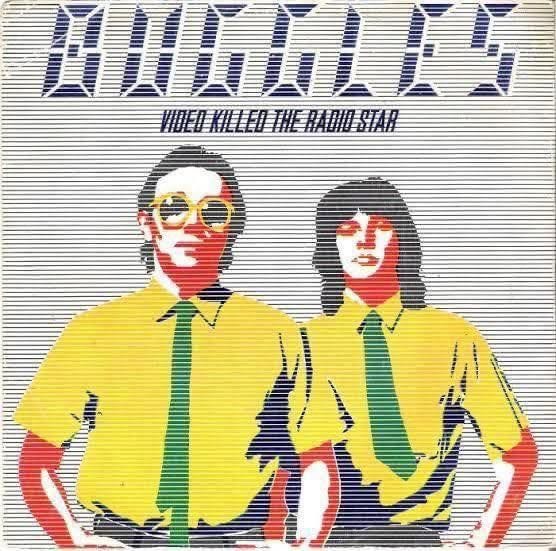
Here on YouTube.
New Year’s Eve 2025, MTV terminated its 24-hour music channels completely. The final broadcast element was ‘Video Killed the Radio Star’, which was also the very first music video shown by MTV on August 1, 1981.
MTV defined media culture in the pre-Internet age, but it’s out with the old and in with the new!
“Video Killed The Radio Star” by The Buggles
Wait 'til your brothers and your sisters, see where you been
And if you loved the journey more than the end, go ahead
Just turn that hourglass around and count to ten
This ain't goodbye no more
Nah, it just began
Thanks for reading, friends. Please always be in touch.
As always,
Katelyn