
Dear Friends,
For those arriving for SXSW, welcome to Austin! Reports of extended TSA lines for morning departures have been popular on X this week, only trumped by the follow-up notes from locals citing the need to expand the airport as soon as possible.
All I’ll add is that I appreciate the TSA workers who are still showing up while not receiving their paychecks, and it’s nice to have events come to your home town.
Today's Contents:
Sensible Investing: Private Credit & 401K Exit Liquidity
People are Bad at Math
Weeklies: Selfie & Song
Sensible Investing: Trends
Private Credit - Yikes
The market is (finally) waking up to the private credit bubble. We’ve written about this before (US Banks’ Private Credit Loan Exposure Nears $300 Billion from a report from Moody’s), and the dominoes have started falling.
Blue Owl Capital recently locked retail investors out of quarterly redemptions from one of its semi-liquid private debt funds, triggering a 6% drop in its share price.
While the headline default rate in private credit has remained below 2%, once selective defaults and liability management exercises are factored in, the “true” default rate approaches 5%. Payment-in-kind usage has risen notably — public BDCs now receive an average of 8% of investment income via PIK, essentially a sign that borrowers can’t pay cash and managers are quietly folding.
Matt Levine has been great on all of this, no surprise.
Around 40% of private credit loans are concentrated in the software industry, which is under stress from AI disruption. See chart below.
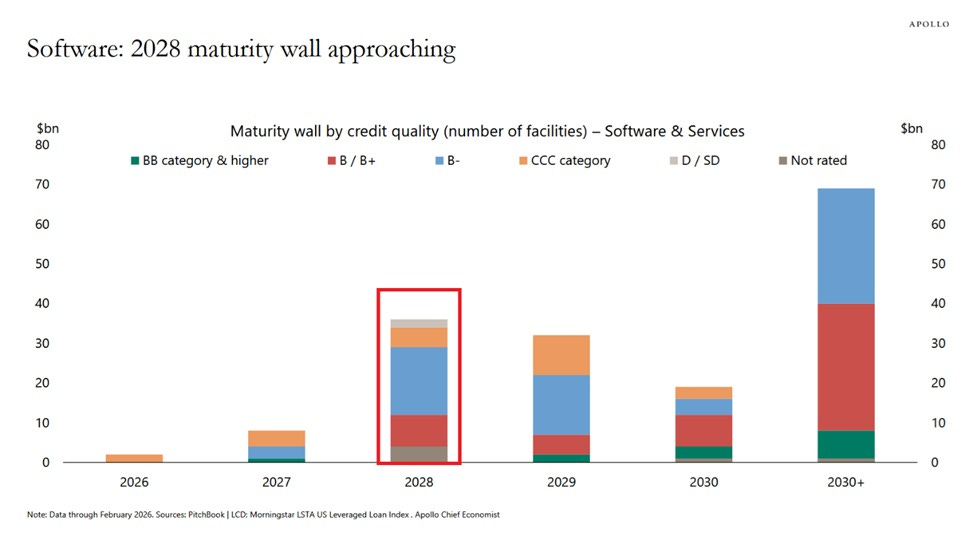
Large banks are exposed through what one analyst called “creative financing schemes,” such as PIK structures. The market is beginning to react accordingly.
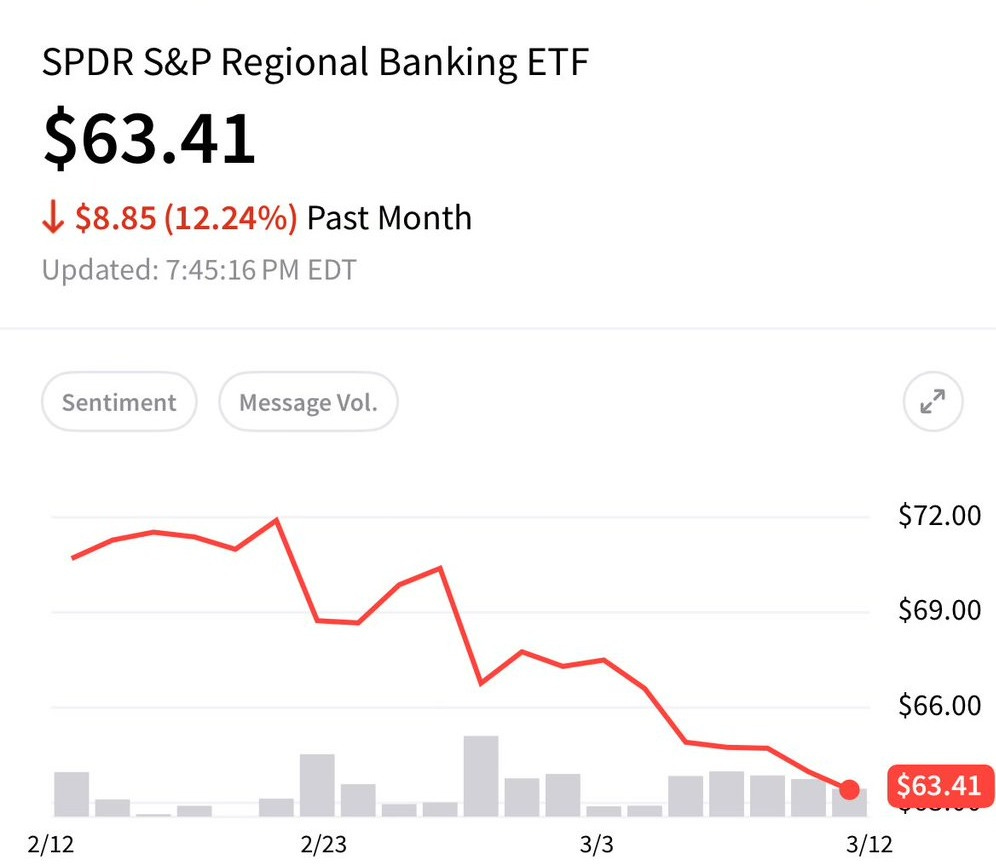
Here are the recent dominoes: Thrasio’s bankruptcy in early 2024, Tricolor in late 2024, First Brands’ alleged collateral double-pledging surfacing in early 2025, Blue Owl gating withdrawals in February 2026, and an Apollo-managed BDC cutting its payout and marking down assets.
Let’s see what comes next.
Nasdaq & SpaceX, 401ks as Exit Liquidity
SpaceX is leaning toward a Nasdaq listing for what could be the biggest IPO in history, seeking a valuation of around $1.75 trillion, which would make it the sixth-largest company by market value in the U.S. Lots of people in Austin are heavily invested in the now concentrated ‘Muskverse’ company.
Recently, SpaceX has made early Nasdaq 100 inclusion a necessary condition of the listing, not a hope or preference.
To accommodate this, Nasdaq has proposed a “Fast Entry” rule that would allow a newly listed company with a market cap ranking in the top 40 of the index to gain inclusion within roughly one month of listing. Currently, companies wait up to a year, during which price discovery occurs and, in theory, investor protection is applied.
George Noble broke down the mechanics: at a 5% float, SpaceX’s $1.75 trillion valuation yields roughly $87.5 billion in publicly tradable stock — but passive funds would be forced to buy as if SpaceX were worth $437.5 billion. QQQ alone manages nearly $400 billion. The full Nasdaq-100 ecosystem across ETFs, mutual funds, and derivatives represents over $1.4 trillion in exposure. Passive buying inflates the price.
S&P Global is reportedly evaluating similar changes to the S&P 500 inclusion rules. For a company like SpaceX, automatic inclusion would force every index fund to buy shares mechanically, regardless of valuation.
The big issue isn’t about SpaceX. This is about whether the infrastructure of passive investing is used as an engineered liquidity event for private markets and insiders. The seasoning period exists for a reason.
Erosion of common-sense rules to protect retail shareholders chips away at the Jack Bogle world of passive management, which would be unfortunate for all.
Doing the math is the key to critical thinking, and it’s never been more important
In all public dialogue, it’s worth remembering the declining education standards and poor numeracy of a supposedly educated population.
I collected these examples in response to the viral article from late fall titled "UC San Diego Finds That One in Eight Freshmen Lack High-School Math Skills, and 70% of those lack middle-school math skills."
The punch line is that students are showing up in college with A-average high school grades, having taken calculus, yet are unable to do basic algebra.
The Economist provided the graph below, which shows an increase in the number of graduates alongside a decline in SAT scores. A full picture includes the context that the number of students taking the SAT increased after 2010, AND as more students took the SAT, a wider range of academic abilities was represented. But, the chart is still telling for the credibility of grades.
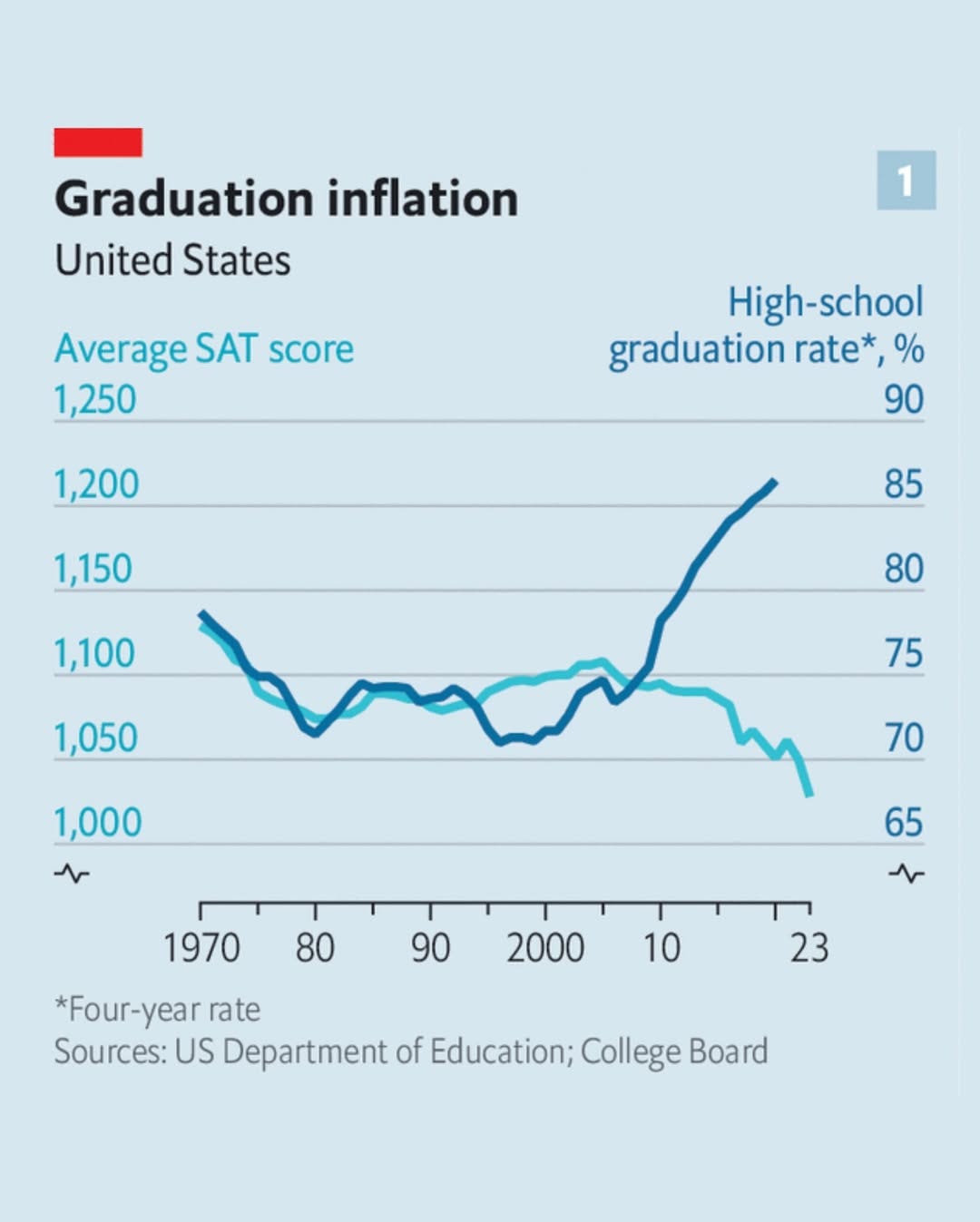
The education system is producing graduates with weaker quantitative skills; the self-reported standards that certify those graduates are now unreliable; and we’ve built systems that let people advance without penalty for being unable to reason numerically. A friend at a MBB strategy consulting firm recently told me that every candidate he interviewed failed the mental-math portion of the case interview. They hired some of them anyway.
People with low levels of these skills struggle with second-order consequences, long-term planning, and cause-and-effect reasoning. They don’t like thinking because it’s difficult and not a muscle they use frequently - so they resort to things they’ve memorized (rote), or feel (emotives) because that’s what is intuitively ‘true’ to them. And they don’t re-evaluate or reason through behind the surface.
I first encountered “Grift Math” myself professionally 15 years ago when one of my Pearson portfolio companies in South Africa was trying to hire math teachers. They’d give the candidate a math problem like ‘President Zuma makes 2 million Rand a year. He just bought a house for 300 million Rand. How many years will it take for President Zuma to pay off his house?’
Most (all?) of the candidates would answer ‘2 or 3 years.’
Why? ‘Because he is the chief, and the chief gets what the chief wants.’
And, in practice, that was still a correct answer.
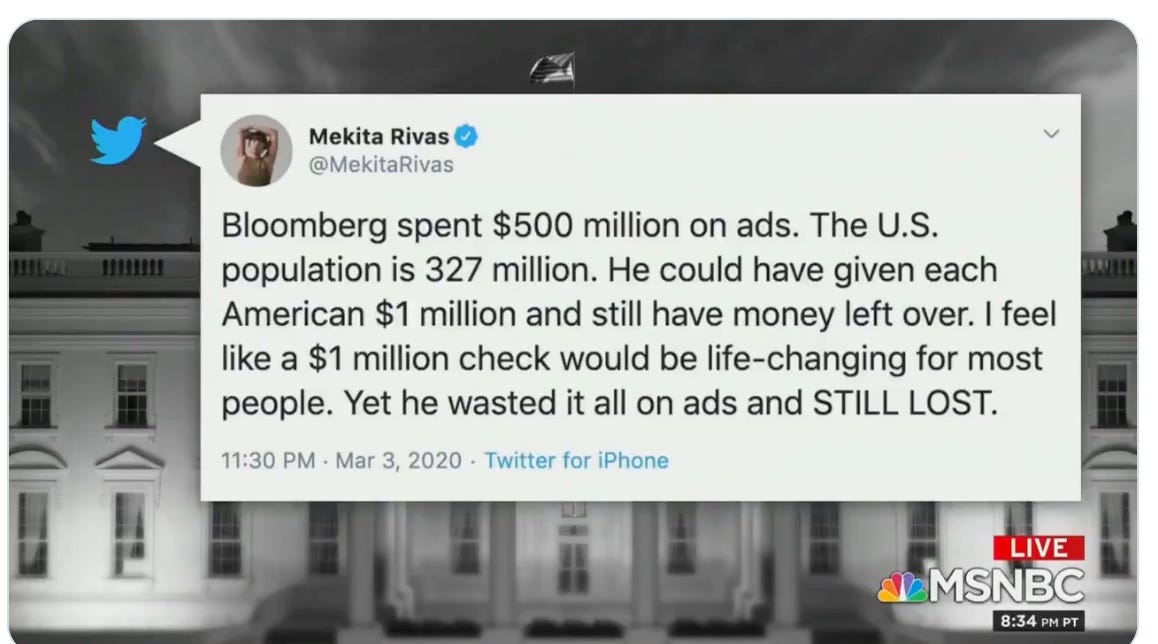
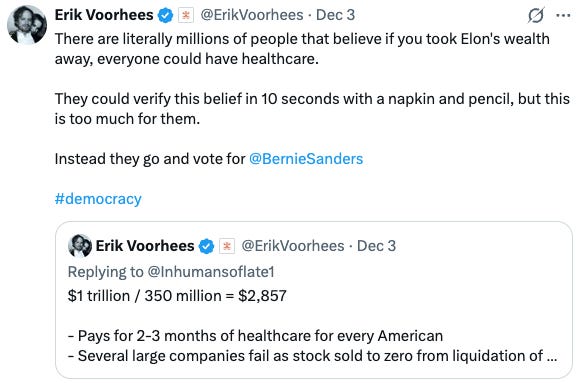
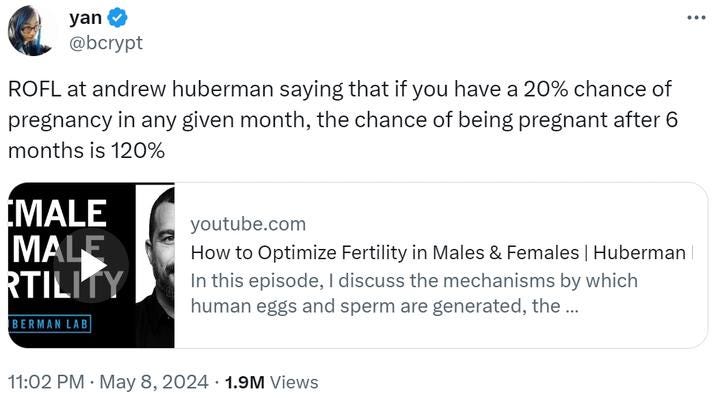
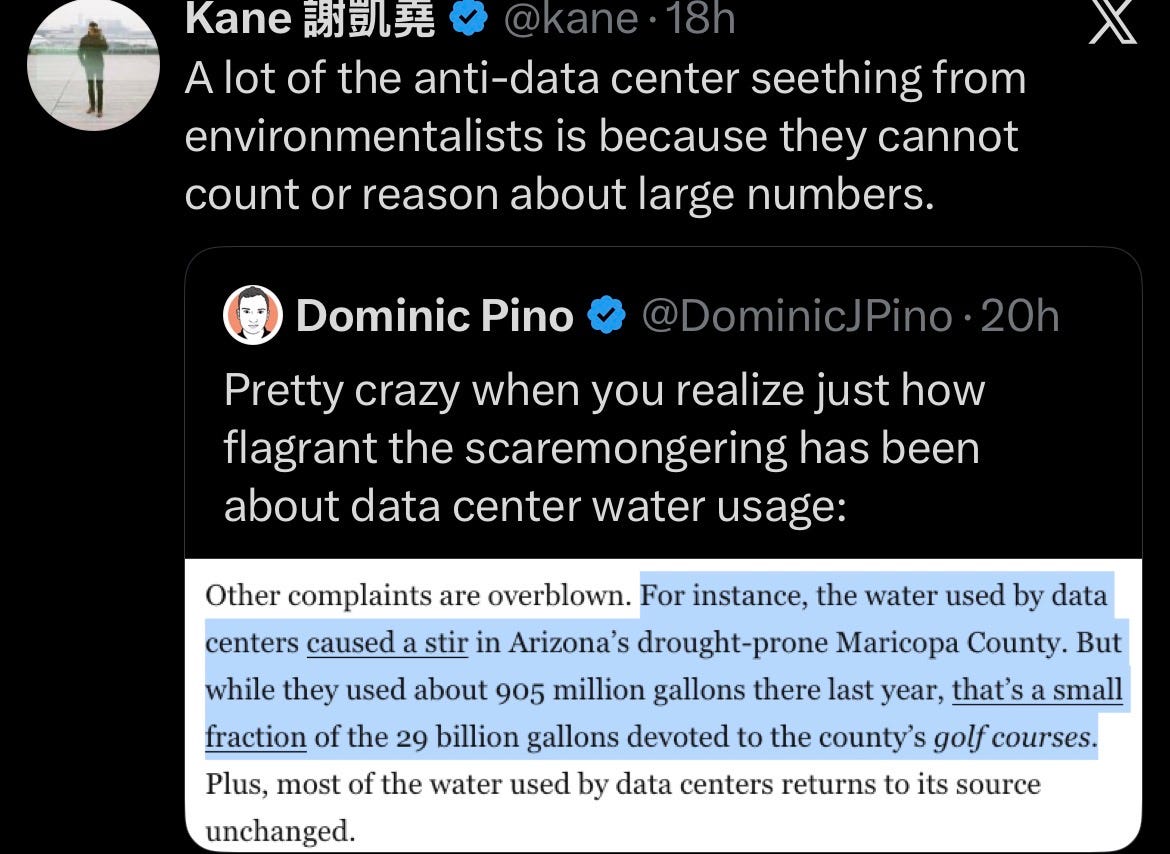
This matters because numeracy is what lets you catch people. It’s what lets you see that Huberman’s fertility math produces a 120% probability. That Mara Gay’s Bloomberg math — Bloomberg could give every American a million dollars with his $500M ad spend — is off by a factor of roughly 650. That “Girl Math” isn’t a cute meme; it’s a named and celebrated cognitive failure. That “Socialist Math,” “Environmental Math,” and every other flavor of motivated arithmetic work because the audience has been trained not to check, and the answers ‘feel true’ in practice.
Examples:
“Girl Math” is wishful thinking without analyzing the reality of some financial situations, or as the internet defines it, ‘a meme, used to describe rationalizations by young women to justify indulgent and potentially irresponsible spending habits.’

Socialist and Billionaire Math:
Mara Gay (a current member of the NYT editorial board) explained on MSNBC live that Michael Bloomberg could give every American a million dollars instead of spending $500M on ads during his brief presidential run (citing and promoting the tweet below):
People believe it about Elon as well:
Andrew Huberman Math: On January 23rd, 2024, the neuroscientist and podcaster released a podcast episode on optimizing fertility in males and females, which received over 290,000 views on YouTube. At one point in the episode, Huberman calculates the probability of a woman under 30 years old getting pregnant after six attempts to conceive, erroneously estimating it to be 120 percent.
Environmental math about data centers:
Is there a fix for this? I’m not sure there is.
Weeklies: Selfie & Song
Selfie: Linda, GSB, AI & Education in the developing world
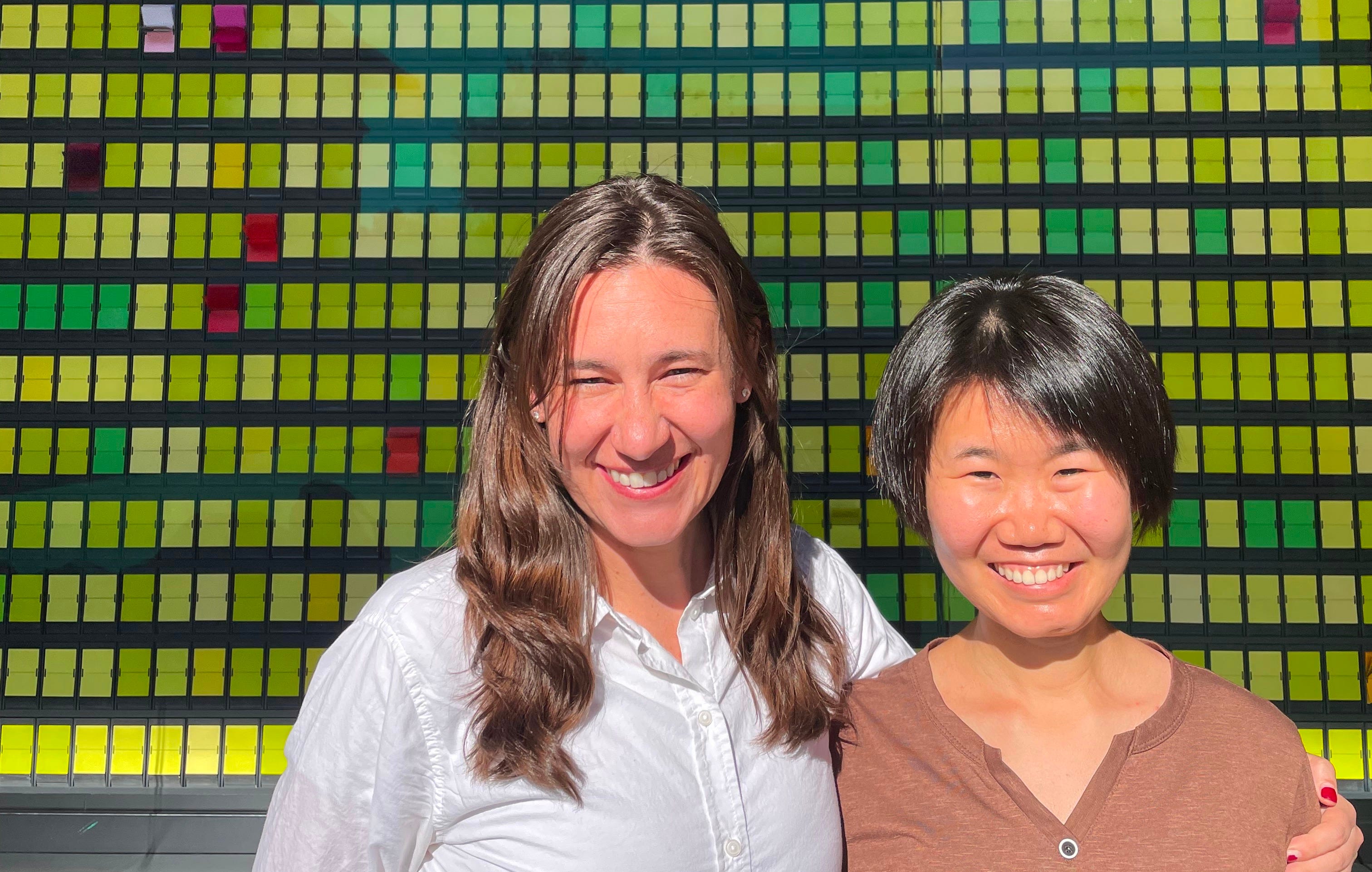
A few weeks ago, I got to hang out at Stanford with Linda Zhang, one of my mentees and friends. She set me up with a bunch of her classmates to do the whole Coupa Cafe back-to-back 1-1 with students starting companies. And, yes, it’s just like shooting fish in a barrel.
Linda is a total killer. Graduated from Duke Undergrad, started her career at McKinsey, worked in Sierra Leone & Nigeria, driving the delivery of education outcomes. Does this sound like someone you know!?! :)
Linda is now a Knight-Hennesy Scholar and one of the foremost thinkers in global education among Stanford GSB students.
She’ll be in London from March 29 to April 1 (before that, in Oxford and Munich) and is looking to meet with movers and shakers in education there. If that’s you, I’d be happy to connect you. She wants to build the next phase of her career, bringing AI to education in emerging markets, and I know of absolutely no one better to do it than her!
Song: I Know How To Speak

Here on YouTube.
The band has stated that this song is about the impending weight of the future. It’s a long song with a lot of instrumental work, with a repetitive guitar melody and an intermittent, simple piano riff on top.
Given the above remarks about the future (and we haven’t even gotten to geopolitics!), this song is a worthy listen and reflection of one’s own agency.
“I Know How To Speak” by Manchester Orchestra
I know how to speak
And I know where I'm going
I wanted to seek
But I got distracted
Thanks for reading, friends. Please always be in touch.
As always,
Katelyn