
Dear Friends,
Hope you are surviving (and thriving) as we enter the holiday season. Two more weeks left in the year, and then we get to start again!
Today's Contents:
Sensible Investing: Trends
Decline of Reading - and Thinking
Weeklies: Selfie & Song
Sensible Investing
Is It A Bubble? Howard Marks Memo. Nothing new here, other than the postscript reflection on the potential for social unrest from AI disruption. Nonetheless, the memos are a helpful distillation to read through.
Private Credit: Fact vs. Fiction. PPT from Apollo. General overview, but clear. Asset management's largest firms serving individual investors want to find a way to provide access to private-market opportunities, so we will continue to see this sort of public marketing material.
Thread to Understand GenZ: The “DoorDash lifestyle” is an artifact of three massive structural shifts that older generations don’t see because they didn’t grow up inside them.
The marginal cost of money changed for Gen Z
Consumption is now social currency
The middle class collapsed, but lifestyle costs decoupled from income
2025: The State of Generative AI in the Enterprise from Menlo Ventures. A lot of what is called ‘Enterprise AI’ is SaaS 3.0. So you could just view this as series of software updates.
Alphabet Poised for Another Paper Gain as SpaceX Valuation Jumps. SpaceX saw a big valuation jump, and Elon said it will go public at a $1.5 trillion valuation in 2026. We’ll see, but anyway, Alphabet (Google) has significant exposure to the company, so you probably do too. It’s a reasonable take that the lowest-cost exposure to the best private tech companies might come through the most prominent public tech companies.
Bloomberg Jealousy List: 2025. One of my annual favorites. Curated list of stories journalists at Bloomberg wish they wrote.
The Decline of Reading… and Thinking
This year (and last), I examined the future of the reading category. While I have still mostly concluded from a venture point of view that it remains uninvestable, there were certainly interesting (and bizarre) findings. Here we go.
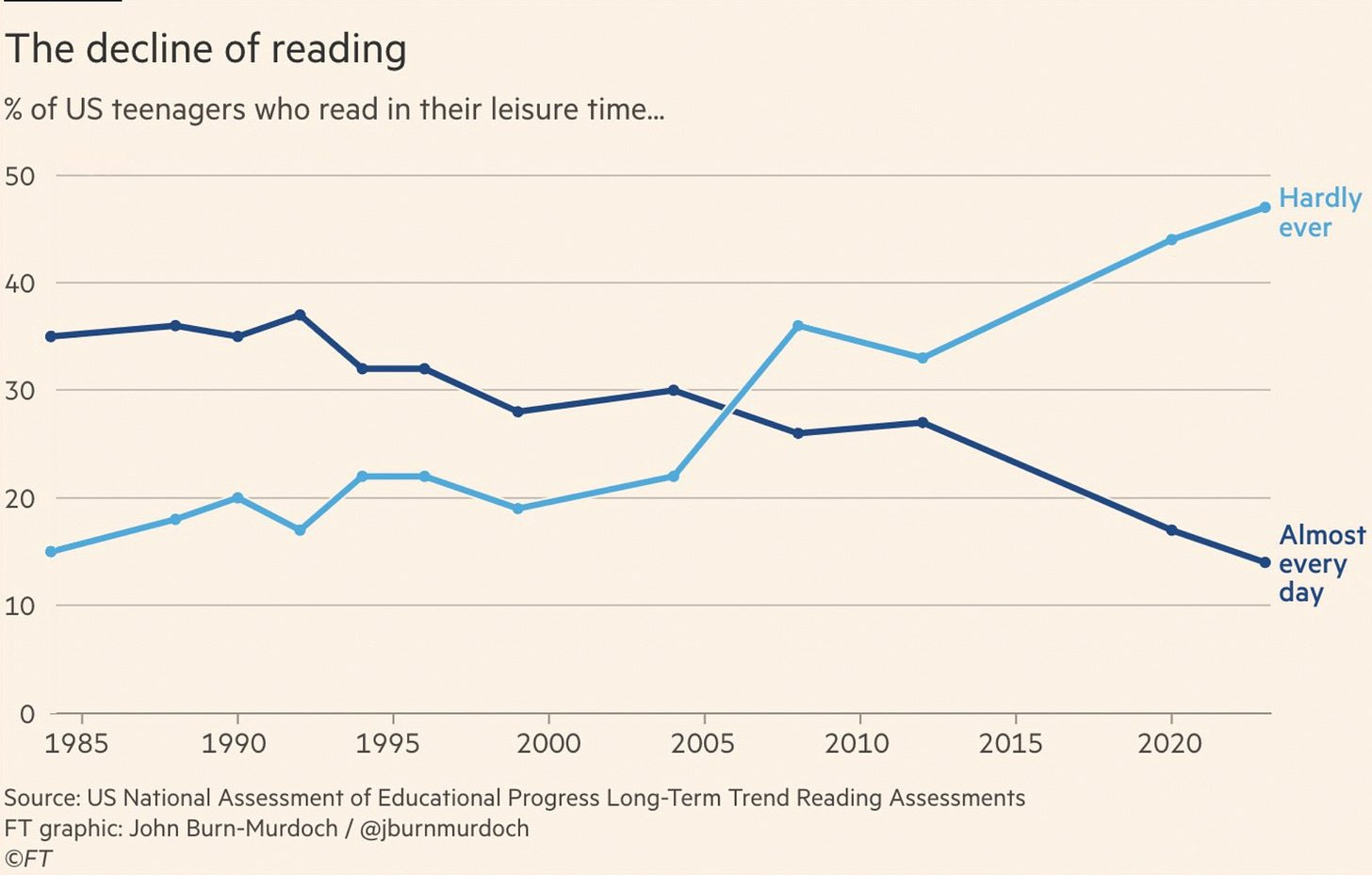
The chart above has made the social media rounds over the fall, along with this essay: The Dawn of the Post-Literate Society, and The End of Civilisation. It’s probably the most liked, most shared publication of the year - at least on a medium meant for reading.
“To engage with the written word”, the media theorist Neil Postman wrote, “means to follow a line of thought, which requires considerable powers of classifying, inference-making, and reasoning.”
As Postman pointed out, it is no accident that the growth of print culture in the eighteenth century was associated with the growing prestige of reason, hostility to superstition, the birth of capitalism, and the rapid development of science. Other historians have linked the eighteenth-century explosion of literacy to the Enlightenment, the birth of human rights, the rise of democracy, and even the beginnings of the Industrial Revolution.
The world as we know it was forged in the reading revolution.
Even the NY Times has now written articles on the decline of reading full books in college.
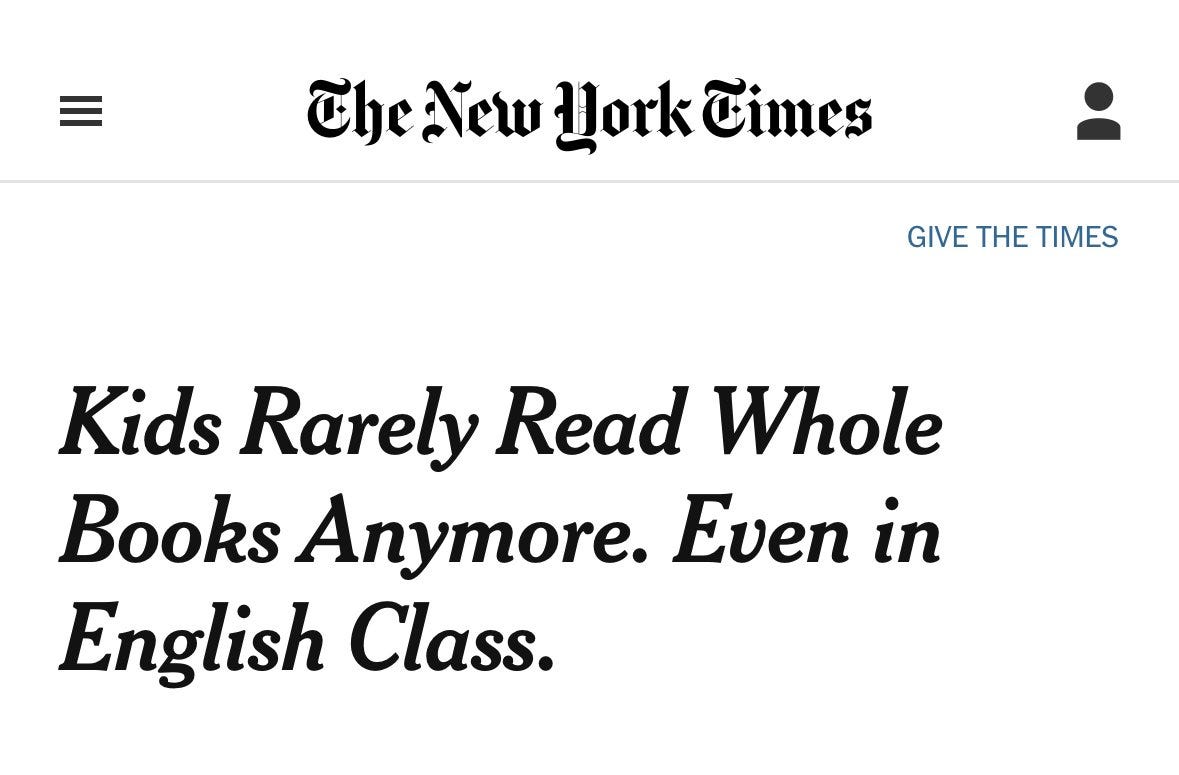
Most people blame the decline in reading on the rise of smartphones and social media. Several people have shared an essay titled "Everything Is Television" with me, which expresses that view with data. It’s preaching to the choir to proclaim the value of reading here. This is certainly not an overly visual publication.
And, often, poor literacy starts early. As we know, reading scores in U.S. K-12 have been declining. I’m not even going to get into how we know that teaching reading using phonics is highly effective. Yet, some members of the education research establishment still contest this and got their preferred policies implemented, leading to devastating learning loss.
You can follow this actively on my friend Niels Hoven’s X feed. Niels founded a company called Mentava that teaches kids to read early on a highly accelerated basis. He (incredibly!) charges $500/month for the app, and many parents love it! Of course, you could do all the exercises using flash cards or books, so there are low-cost methods, too. What’s sadly unsurprising is how much hate he gets for providing this service. This is one of the problems.
All this leads to low adult literacy - 50% of Americans read below a sixth-grade level. Most people I talk to find that unbelievable. But mostly, it’s difficult for anyone who reads at a college level or above to comprehend what it’s like to go through life without reading (or thinking) very deeply.
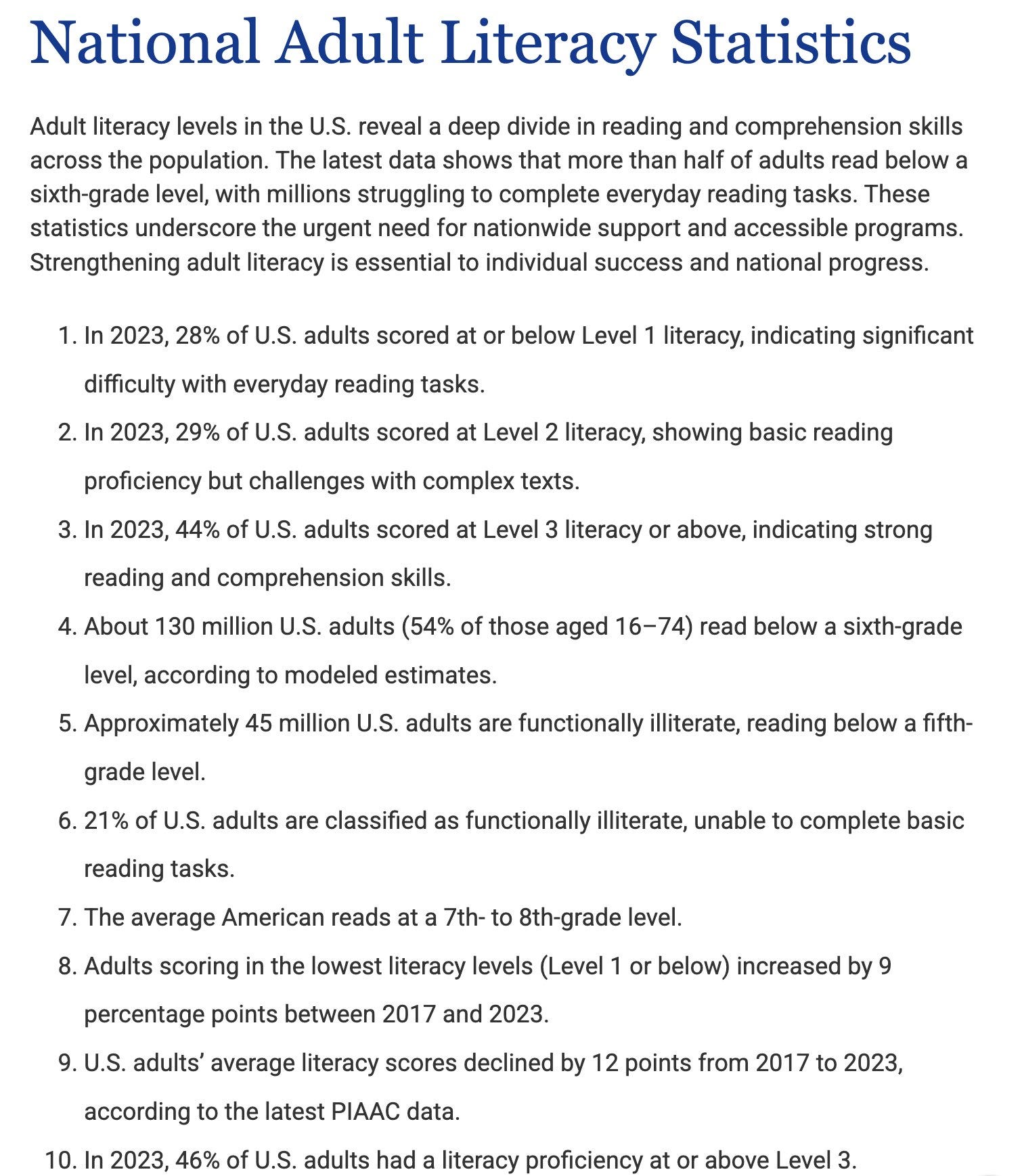
Literacy rates on social media are low.
When I counsel founders and friends on internet publishing, the first thing I do is paste the text into Hemingway, a text editor that tells you the grade level required to read it and highlights the hard-to-read and very hard-to-read sentences. The lower the grade level, the better! Ideally, as you can see from the data, grade 7 or below.
Here are a few examples:
I recently read the latest Salley Rooney book, Intermezzo. It’s about two brothers who have recently lost their father. Both are inhabited by grief and self-loathing. Half the book is written in a stream-of-consciousness style, perhaps intended to resemble Gen Z speak. By the end of the book, these paragraphs were hurting my brain. According to Hemingway, this is Grade 4.
Swings his legs out of bed finally and plugs his phone into the wall. In and out of the shower, thick soft bath towel, wet footprints on the kitchen tiles making breakfast. Late morning light through the Turkish curtains. After eating he rinses the dishes, hers also. His clothes hanging over the back of the chair in her room. Clean underwear in the zip pocket of his bag. Powers up his phone and pulls his socks on waiting. Home screen finally. Lifts the device and starts scrolling through notifications. Work mostly. New text he sees from Janine’s number. Strange. He thumbs to open.
I’ve seen a lot of hard-to-read prose from friends looking to communicate broadly but missing the mark. An essay a friend posted on LinkedIn about the destruction of the rule of law (excerpt below) took the cake. The previous record was a 12. This is Grade 16.
Dominic Caldwell frames the crisis through coordination game theory. Drawing on Przeworski’s “paper stones” metaphor and Pinker’s common knowledge framework, he shows how rule of law isn’t force but recursive trust—”I know that you know that I know” the rules will be enforced. Break that loop, and constitutional democracy becomes unenforceable theater. The Caldwell paper identifies four failure cascades already underway: institutional decay (unpunished norm violations signaling enforcement has stopped), elite defection (judges and generals calculating that resistance is futile), preference falsification (citizens staying silent when they can’t gauge real opposition), and crisis exploitation (emergency powers becoming permanent). Karthik Subasri takes this framework and does the math.
But some segments of reading have actually expanded!
Specific categories of reading are going way up. In fact, Barnes and Noble has opened 60 new locations this year; BookTox and Romantasy (Romantic Fantasy) are driving it. Austin has a dedicated bookstore for Romantic Fiction - called Flutter.
“A Uniquely Portable Magic”: Why Book Publishing Has Hope. A report from Bain that shows people are reading less, but those who read focus more and are willing to pay for the good stuff—if you give it to them. Some of the venture-backed innovations in this category include Bindery Books, books chosen for publication by ‘tastemakers.’ Another is 831 Stories, a millennial career-woman-focused romantic fiction publisher. In these stories, like Big Fan, which I read as part of diligence on the company, you get lines like this “I’m thirty-five, not twenty-two, I want to tell her. I am too old to be patronized like this and too young to have bought into Lean In. I don’t just have potential; I have success.” Yes, this is inside a romantic fantasy book.
And, yes, I almost fell out of my chair laughing. They certainly have a real niche, but the larger market is for - and this is truly bizarre - books in the romantic fantasy category or ‘monster bait romance’ like Morning Glory Milking Farm.
**Warning** Once you read this verbatim book’s description, it will be something you won’t be able to unsee.
Violet is a typical, down-on-her-luck millennial: mid-twenties, over-educated, and drowning in debt, on the verge of moving into her parents’ basement. When a lifeline appears in the form of a very unconventional job in neighboring Cambric Creek, she has no choice but to grab at it with both hands.
Morning Glory Milking Farm offers full-time hours, full benefits, and generous pay with no experience needed . . . there’s only one catch. The clientele is Grade A certified prime beef, with the manly, meaty endowments to match. Milking minotaurs isn’t something Violet ever considered as a career option, but she’s determined to turn the opportunity into a reversal of fortune.
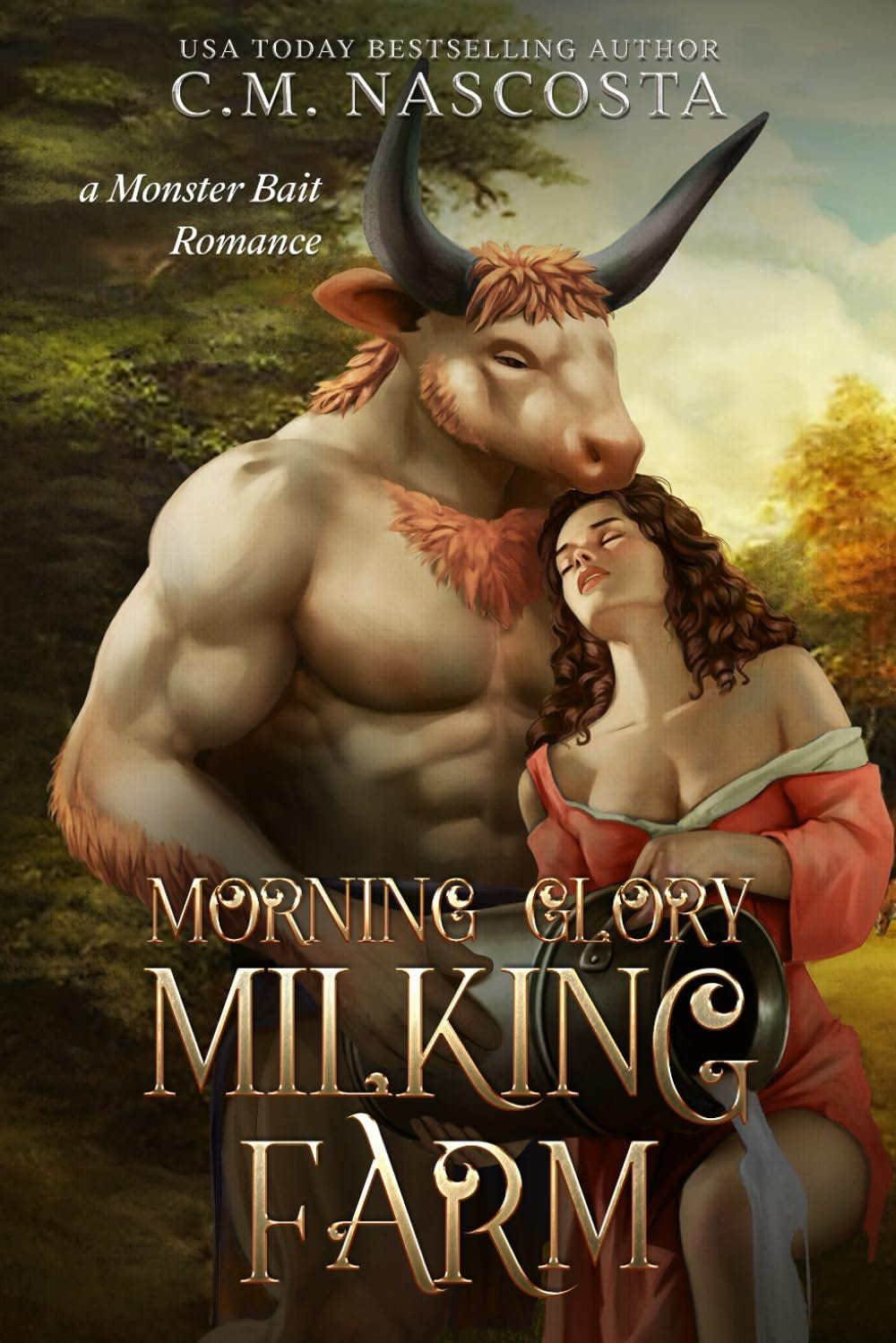
Morning Glory Milking Farm was rated 3.6 by ~60K ratings on Goodreads. Big Fan was rated 3.75 by ~15K. Both book types are clearly widely distributed and resonate with many readers, although, of course, the bigger market is the most racy. More than the bestiality element, the fact that this story is contextualized in a hopeless economic situation of ‘the typical millennial’ with social work grad-student debt is most interesting. That’s a real issue.
Of course, as investors, the key question is, will it all be AI slop in a few years? My prediction: Not all, but a lot. Indeed, the monster bait romance category.
Good news! Some people are still reading a lot. Bad news! It’s basically porn for women.
Rough trend. How bizarre.
Lots more to unpack. And don’t worry, we’ll get to Math soon.
Weeklies: Selfie & Song
Selfie: Peerage, College Friends, System Stewards
This newsletter celebrates and highlights good stewards of our societal systems: every institution is only as good as the people whose judgment and integrity lead the way. Since it’s the holiday season and it’s good to be positive, we will end the year by featuring several of the best leaders that I have the privilege to know.
This week, we congratulate *Lord* Michael Barber, who was named on Wednesday to a life appointment in the House of Lords by the UK King and the Prime Minister’s Office.
David Pitt-Watson, Michael’s college best friend, was also granted peerage. David was a critical informal advisor to us as we built Delivery Associates over the years. He was also the long-time manager of Hermes Fund Managers (now Federated Hermes) and the commercial director of their newly formed shareholder activist funds:
These funds, known as the Focus Funds, grew to be the largest of their kind in Europe. Pitt-Watson became head of the funds and a director of Hermes in 2004, where he founded its Equity Ownership Service, a service to pension funds which aims to ensure that shares they own are used to promote good management practice and sustainable investment. By 2025, HEOS advised on over $2,000bn worth of assets. Hermes’ interventions in companies have led to the successful turnaround of some of the country’s largest companies.
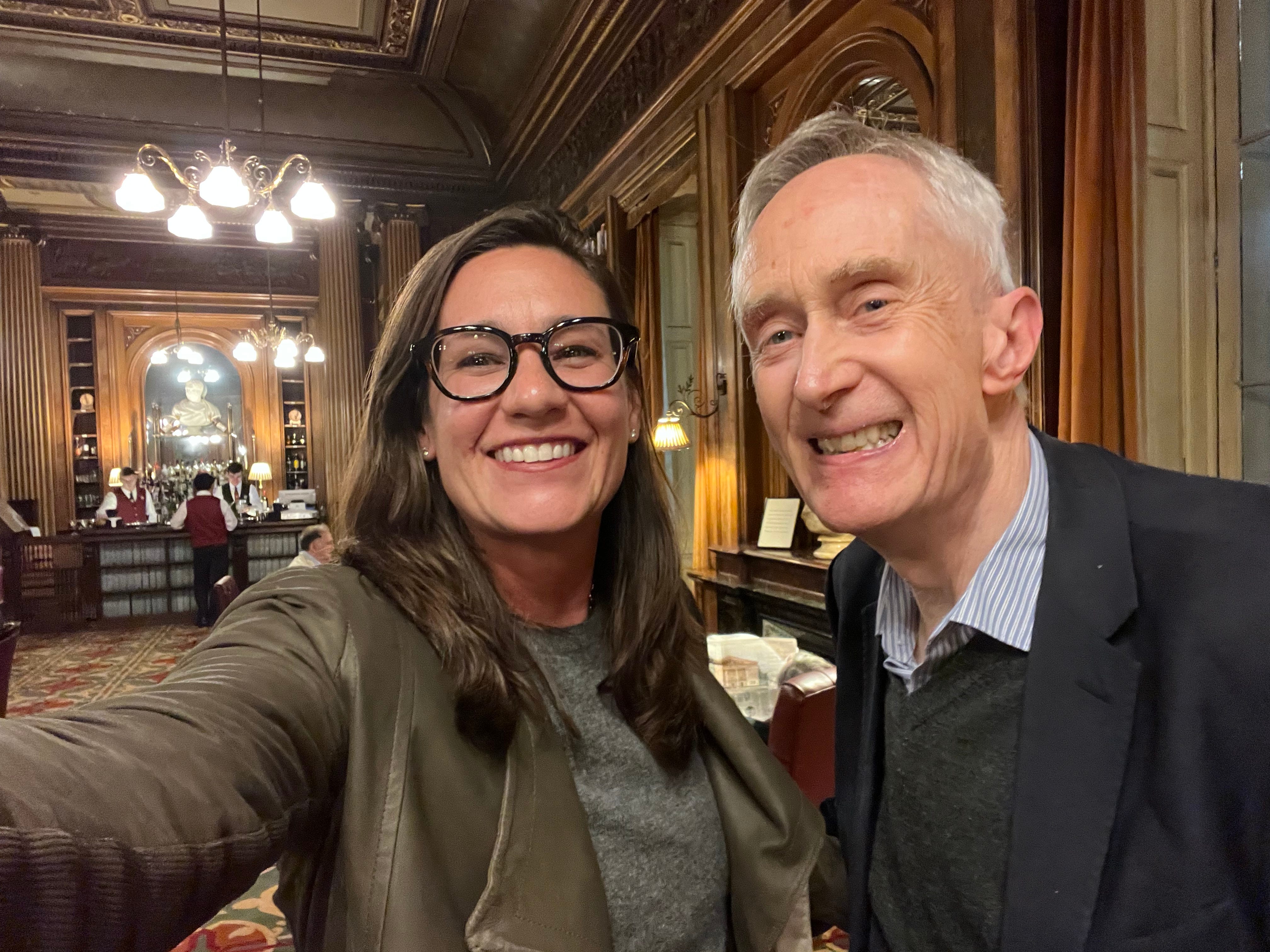
Big congrats to David & Michael! Makes me hopeful for the future of Britain—also, inspiring life goals for friendship and career achievements.
Song: How Bizarre

Here on YouTube.
Super popular song released Dec 1995 (30 years ago, friends!).
It’s an allegory for the unpredictability of life’s journey. The upbeat tempo contrasts with the narrative's serious undertones, creating a playful yet reflective atmosphere.
The song conveys vivid imagery, contrasting perspectives, and a sense of adventure to convey the message that life is a mix of the bizarre and the ordinary, and that we should embrace its unpredictability with a sense of wonder and curiosity.
What a gem! Enjoy!
“How Bizarre” by OMC
Pele yells, “We’re outta here”, Zina says, “Right on”
Making moves and starting grooves before they knew we were gone
Jumped into the Chevy and headed for big lights
Wanna know the rest? Hey, buy the rights
Thanks for reading, friends. Please always be in touch.
As always,
Katelyn
It's interesting how much you linked AI disruption to social changes. Do you think the GenZ shifts will make future adaptions harder? So sharp!
Frankly $500/month is worth it for how important learning to read is. Don't know how long the program lasts, though.
I think a major factor of illiteracy is forced reading subjects, and I think romance based text shows that people are open to reading but wish to read text that they're interested in. I mean Shakespeare is the most popular and enduring writer of love stories in Western literature, and those have stuck around.
I may be wrong, but Pride and Prejudice would be a romance that depicts class distinctions, needed financial marriages and women's dependence on family alliance as an arc.
Pride and Prejudice was the original Milking Farm /s
This is a total waste of time clip, but funny on Milking Farm https://youtu.be/U882Z8g9UWg?si=KvNcbreqP8QVYIhI