
Dear Friends,
Happy Easter to those who celebrate.
One of my favorite newsletter writers announced that he's taking a break this week because he's consuming more and gleaning less. I've talked with others who have felt similarly, especially when you can't trust the basics to be accurate. My response? I went back to my bookshelf and reminded myself of the importance of practice as part of original thinking and engaging source material.
This issue is about originals.
Today's Contents:
Sensible Investing & Notable Charts
Reading
Weeklies: Selfie & Song
Sensible Investing: Trends
Software Market Update from Redpoint Ventures. A detailed slide deck on the resiliency of vertical SaaS, the car crash from horizontal software plays, plus the advantages of an AI native company.
Clever is the New Cool, apparently. A broken clock is right twice a day. Feels timely just as travel is going to get harder, and everyone is going to feel poor. H/T to SIC.
There is a narrative circulating in Venture Land that almost all LP gains come from a few big companies. If you believe this - which is a high-level macro view only, for the record; it’s gross oversimplification since there are riches in niches - and don’t currently have exposure, then you should just buy Amazon (owns 9-18% OpenAI), Google (owns 14% of Anthropic and 7.5% of SpaceX), and Microsoft (owns ~25-30% OpenAI) as your way in. And if you own passive ETFs that track the S&P 500, well, you should already have exposure already.
Notable Charts
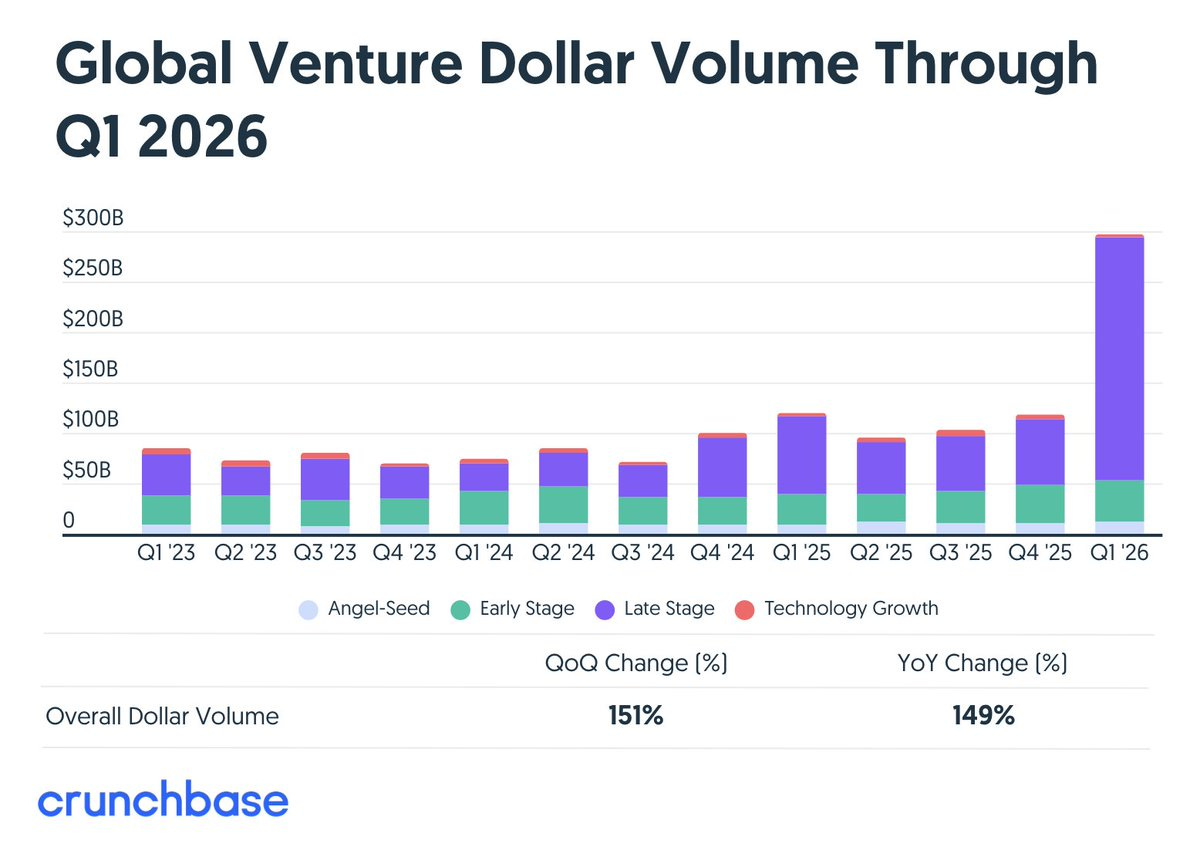
Q1 was extraordinary for the deployment of venture ‘dollars’. I think this reflects a few things: 1.) companies staying private longer, so these are late-stage growth rounds, as obviously indicated 2.) Deep Tech and AI companies are capital-intensive and raising large rounds earlier, and 3. (Related to both) More capital is going to larger funds and is being deployed at a late stage through SPVs.
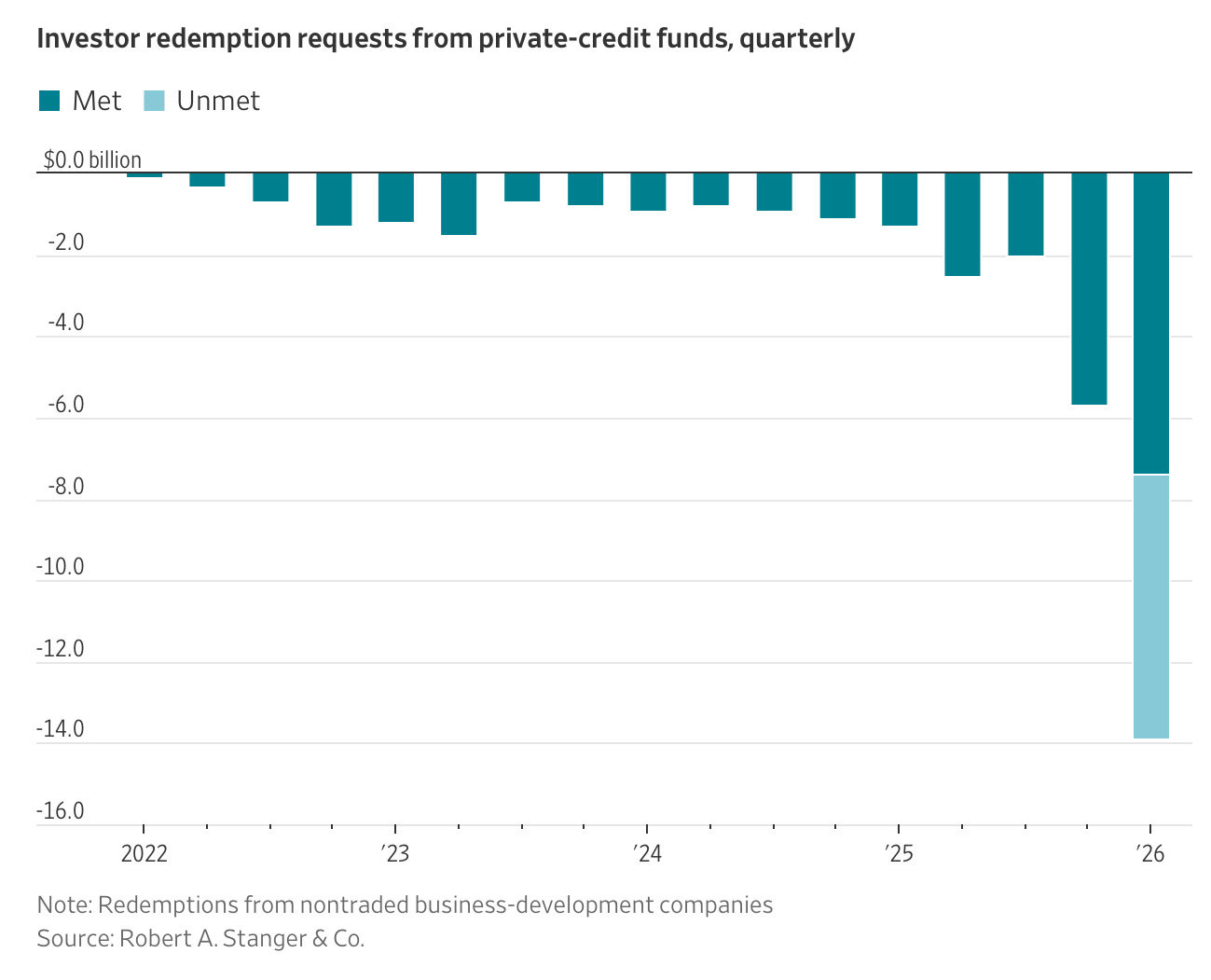
Meanwhile, private credit continues to look shaky, particularly with the unmet redemption requests.
Reading the Internet has declining returns, so go back to basics
Ben Dietz, the writer of one of my favorite newsletters [SIC], announced this week that he is taking a break and gave this as the reason:
I often say that reading the internet every morning is a mental health exercise for me; I have long felt slightly unmoored without an awareness of whatever’s happening in the zeitgeist. But these days I find myself consuming more and gleaning less: I get the sense many of you think the same. Which has lead me to a conclusion: time for a change.
I have felt similarly: reading the Internet felt like less insightful consumption. The New York Times's headline for an article, premised on the wrong name of NATO, was hard not to see as a sign of the times. It’s hard to write well if you aren’t reading well.
To cleanse my mind of all the Internet slop, I went through my book collection and pulled out the ones that actually mattered and had something original or insightful to share that has stood the test of time. Wading through how-to guides, fun novels, self-help, tech history, venture, and startup masterclasses, these were the ones that stood out. I’m going to do this in three parts, especially since there is a lot to say about greatness and great men (stay tuned!)
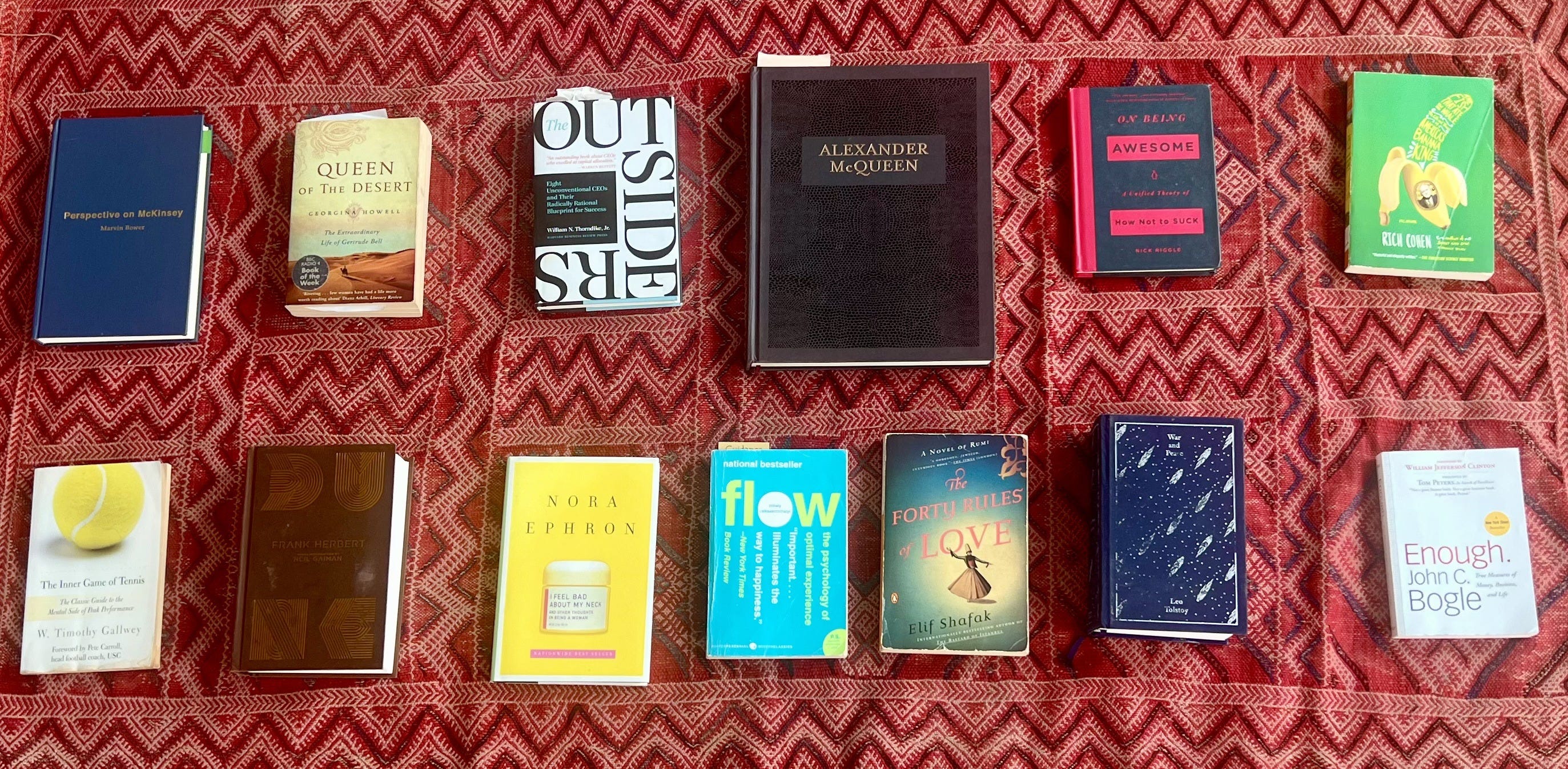
Starting from the top left, first, Perspective on McKinsey. This is a book that is printed and given only to members of the Firm, written by Marvin Bower, the man credited with making McKinsey (and, by extension, the entire management consulting industry) what it is. I include it because, to my chagrin sometimes, the institution has impacted my thinking and my life significantly, and this is its bible. Also, so many of the world's problems would be solved by fundamentally better management - in government, business, education, whatever there is a large institution or multi-layered organization - and this is an art and a science. This book reminds you of that. James McKinsey was the charismatic entrepreneur-thinker. Marvin Bower was the brutally efficient operations builder. The world needs both.
You will find a lot of insight in the historical challenges of nationhood in modern Gulf nations and the Middle East in Queen of the Desert: The Life of Gertrude Bell. Michael Barber gave me this book in 2015, ‘to another great explorer’, when we were working across the region.
Gertrude Bell was a nation-builder before that term existed. After World War I, she was one of the key British figures who shaped the modern borders of Iraq, literally drawing lines on maps at the 1921 Cairo Conference alongside Churchill and T.E. Lawrence.
She spent years before the war traveling through the Arabian desert, learning Arabic, building relationships with tribal leaders, understanding the fault lines between Sunni and Shia communities, and mapping archaeological sites.
She was one of Britain’s finest self-appointed diplomats and served as the connective tissue between British imperial interests and local political realities.
She died in Baghdad in 1926, possibly by suicide, after watching the thing she helped build start to drift from what she’d intended.
In the book, she promised to an Iraqi leader that complete independence was what the British government hoped to give Iraq. “My Lady,” he answered - we were speaking Arabic - complete independence is never given; it is always taken.”
Gertrude was definitely an outsider, but not highlighted in the book The Outsiders: Eight Unconventional CEOs and Their Radically Rational Blueprint for Success. It’s a Warren & Charlie favorite gifted by my friend Charlie Stone. It is a great read - direct, insightful, and rigorous.
What I love the most about The Outsiders, though, is that the people who carry it around seem to be at the upper echelons of status-consciousness. Its most frequent sighting is a VC posting about it on LinkedIn, usually some performative venture dinner where it’s been handed out to curated, collected insiders.
Lee Alexander McQueen, the British design phenom, came from a working-class East London background and was definitely an outsider.
When I was leading Pearson’s corporate venture fund, we had a team retreat activity where everyone brought a special object and did a little show-and-tell. At that time, I was wearing a large black leather cuff bracelet that closed with a skull with jeweled eyes. It was an Alexander McQueen that I had purchased at Heathrow Terminal 5 on impulse.
I explained the constant reminder of McQueen’s philosophy, ‘I work with people I admire and respect. It’s never because of who they are.’ and ‘There comes a time in your life when you focus solely on what you believe is right, regardless of what everybody else is doing.’
When I left Pearson, my team gave me this book, produced for the Alexander McQueen retrospective at the V&A. It’s a reminder of all the good you can do with the right team and strong vision.
Also, it’s a reminder that it's good to keep people a little uncomfortable: ‘I want people to be afraid of the women I dress.’
In New York a decade ago, I was at a Forbes 30 Under 30 dinner for honorees (yes, you can roll your eyes), and I was seated next to a chirpy ‘lister,’ as they are called, dressed in head-to-toe Chanel. I started explaining McQueen to her, and she said, ‘Oh, yeah, I think I went to an event with him a few years ago.’
‘I don't think you did,’ I replied - too harshly, too quickly - ‘It’s impossible. He killed himself in 2010.’
‘Oh, I guess it was Alexander Wang.’
‘Not the same. With respect.’
Weeklies: Selfie & Song
Selfie: FII Priority, Tugce, GCC & Energy
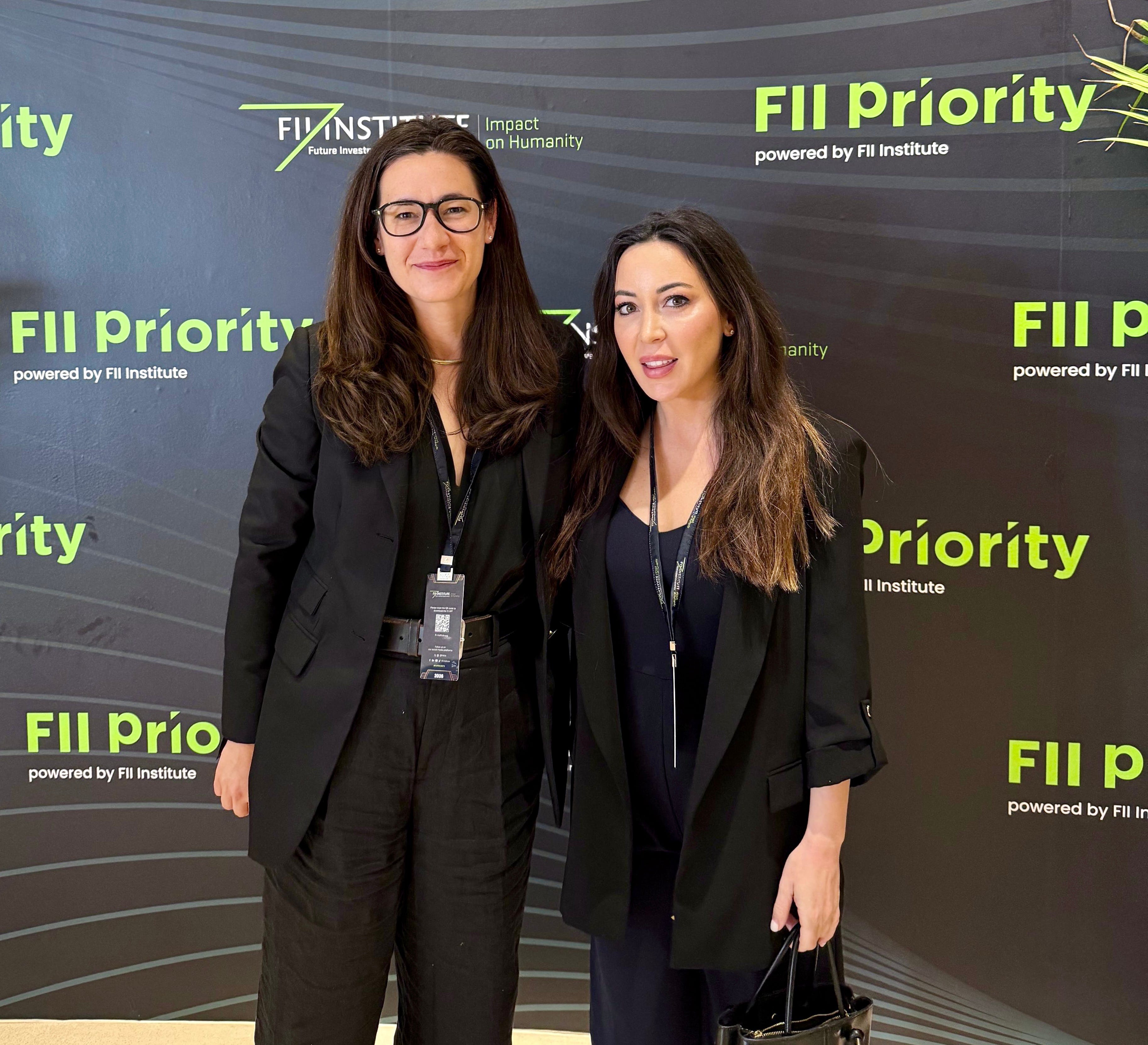
Last week, I went to the Future Investment Initiative conference in Miami. FII is sponsored by the Public Investment Fund, Saudi Arabia’s sovereign wealth fund. The mood was, in general, optimistic, even with the conflict in the region. The consensus was that Iran represented the last threat in the region, and that the Kingdom is supportive of the US, though that cannot be said too loudly.
There was a large focus on infrastructure, defense, energy, and mining, which is no surprise. A couple of people remarked that despite the hype around certain US defense companies, the performance in battle leaves a lot to be desired, particularly related to drone warfare.
I got to spend time with Tugce, who runs Hypernova Capital, a hybrid venture fund of funds that also pursues direct deals alongside her managers and is invested in a bunch of interesting industrial tech companies. We’ve done several investments together, and she is awesome.
Song: Computer Love
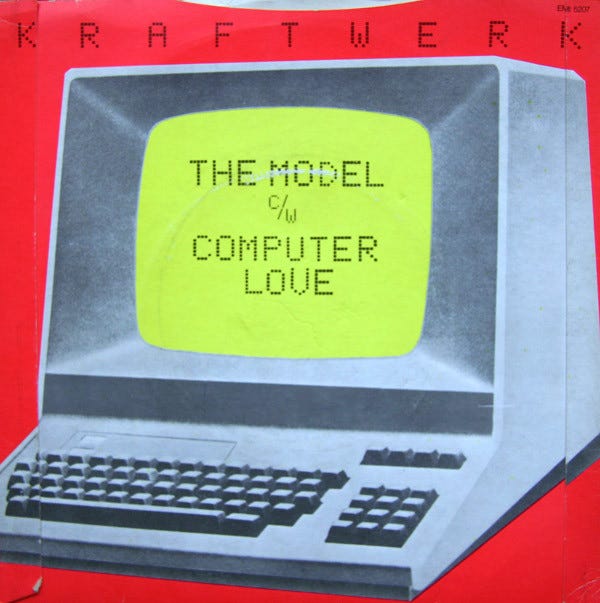
Here on YouTube or sampled in Coldplay's “Talk” here on YouTube.
Computer Love is a song by the German band Kraftwerk released in 1981. It sounds exactly as you’d expect a weird, electronic German song to sound, with stilted lyrics expressing loneliness and longing for connection through technology. It could have been written last week if we could go back to being original and thoughtful again.
If you listen to Computer Love and then Coldplay’s Talk, it’s obvious how massive an influence the electronic melody has on Talk's success. Everyone needs inspiration and to build off the past, but it’s not interesting or meaningful if we leave it all up to computers!
“Computer Love” by Kraftwerk
I call this number
For a data date
I don't know what to do
I need a rendezvous
Thanks for reading, friends. Please always be in touch.
As always,
Katelyn